Flu Activity Remains Elevated Late in Season

DOVER — Although it is late in the 2018-2019 flu season, and total weekly influenza cases have begun to decrease, flu activity in Delaware and across the U.S. remains elevated with an increase in the number of influenza A (H3N2) viruses circulating over the last month. H3N2 viruses are typically associated with more severe illness in older adults, and while anyone experiencing flu-like symptoms should seek treatment quickly, it is especially important for individuals 65 years and older to do so.

As of March 23, 2019, the most recent date for which data is available, there have been 5,854 laboratory-confirmed cases of influenza in Delaware during the 2018-2019 season, 943 of which required hospitalization. These numbers reflect only lab-confirmed cases and the actual number of influenza cases in the state is likely much higher. While this year’s influenza case total is much lower than the 9,051 cases reported during the 2017-2018 season – the highest total since record-keeping began in 2004 – the 2018-2019 season is now the second-highest on record.

As the total number of flu cases continues to climb, so do flu-related fatalities. This season, 20 Delawareans have passed away as a result of flu-related complications. All 20 were infected with influenza A and all had underlying health conditions or suspected health complications. Their ages ranged from 41 to 90 years old.

Nationally, the Centers for Disease Control and Prevention (CDC) reported that flu illness peaked in February, but remains high for this time of year with 34 states, including Delaware, and Puerto Rico reporting widespread flu illnesses. The CDC expects flu activity to remain elevated for weeks. Levels of flu-like illness in the United States have been at or above baseline for 18 weeks so far this season, on track for a relatively long season, possibly exceeding the previous five-year high of 20 weeks. In terms of severity, the CDC estimates that so far this season there have been as many as 508,000 flu hospitalizations and 46,800 deaths.

Unlike colds, which develop gradually, flu symptoms come on suddenly, and include fever, cough, sore throat, runny or stuffy nose, headaches and body aches, chills, and fatigue. Some people develop complications including pneumonia, bronchitis, and sinus and ear infections. People with pre-existing health conditions such as diabetes and asthma are more susceptible to catching the flu.

DPH encourages Delawareans to take everyday steps to prevent the spread of the flu:
• Practice social distancing if you have cold or flu-like symptoms.
• Wash hands frequently with soap and water or use alcohol-based hand sanitizers.
• Cover sneezes and coughs with a tissue, and dispose of tissues immediately; if no tissue is available,
sneeze or cough into your inner elbow.
• Take medications as prescribed.

Social distancing means that those sick with the flu should stay home from work, school, and other gatherings and not return until they have been free of fever – with a temperature of less than 100 degrees F (37.8 degrees C) without the use of fever-reducing medications for at least 24 hours. They should avoid close contact with well people in the household, and stay well-hydrated by drinking plenty of water and other clear liquids. Over-the-counter medicines can provide symptom relief, but if you suspect you have influenza, call your doctor as he or she may decide to provide antiviral medications to help hasten recovery and prevent serious complications. This is particularly important for those who feel very sick, are pregnant, age 5 or younger, age 65 or older or have chronic medical conditions.

DPH also recommends that individuals with chronic diseases monitor and manage their conditions, as non-compliance with physician’s recommendations can increase the risk for infection and complications. This includes maintaining appointments with their health care provider, taking medications as prescribed, and following diet and exercise recommendations from their doctor. Additionally, individuals who smoke and who are ready to stop using tobacco are encouraged to call the Delaware Quitline at 1-866-409-1858.

The CDC and DPH continue to recommend vaccination as long as influenza viruses are circulating and emphasize that it is not unusual for a second wave of flu activity during a flu season. The second wave is usually caused by an influenza B virus. This season, there has been very little influenza B virus activity.

Flu vaccines are still available at State Service Centers, primary care providers and specialists, pharmacies, and some grocery stores. To find participating stores, enter your zip code in the Centers for Disease Control and Prevention’s (CDC) flu vaccine finder at http://www.cdc.gov/flu/. For more information about the flu, visit flu.delaware.gov/ or call DPH at 1-800-282-8672. The CDC recommends use of any licensed, age-appropriate influenza vaccine, including inactivated influenza vaccine [IIV], recombinant influenza vaccine [RIV], or live attenuated influenza vaccine (LAIV). If you have questions about which vaccine is best for you, talk to your doctor or other health care professional. Flu shots are still available at DPH clinics located within the State Service Centers:

• Porter State Service Center, 509 W. Eighth St., Wilmington. For all ages 9 and up. Walk-ins are welcome
Monday through Friday from 8:00 a.m. to noon and from 1:00 p.m. to 4:30 p.m.
• Hudson State Service Center, 501 Ogletown Road, Newark. For all ages, including children age 6 months and older. Call 302-283-7587 (choose Option 2) to make an appointment Monday through Friday.
• Williams State Service Center, 805 River Road, Dover. For all ages, including children age 6 months and
older. Call 302-857-5140 to make an appointment Monday through Thursday, 8:00 a.m. to 3:30 p.m.
• Milford State Service Center – Riverwalk, 253 N.E. Front St., Milford. For ages 9 years and older. Call
302-424-7130 to make an appointment on Mondays from 1:00 p.m. to 3:00 p.m. and Wednesdays from 9:00 a.m. to 11:00 a.m.
• Anna C. Shipley State Service Center, 350 Virginia Ave., Seaford. For all ages, including children age 6
months and older. Walk-ins welcome Monday through Friday from 8:30 a.m. to 4:00 p.m. For information,
call 302-628-6772.
• Adams State Service Center, 544 S. Bedford St., Georgetown. For all ages, including children age 6 months
and older. Call 302-515-3220 to make an appointment on Thursdays from 9:00 a.m. to 11:00 a.m.

For more information about flu surveillance in Delaware, read the weekly flu report at dhss.delaware.gov/dhss/dph/epi/influenzawkly.html.

A person who is deaf, hard-of-hearing, deaf-blind or speech-disabled can call the DPH phone number above by using TTY services. Dial 7-1-1 or 800-232-5460 to type your conversation to a relay operator, who reads your conversation to a hearing person at DPH. The relay operator types the hearing person’s spoken words back to the TTY user. To learn more about TTY availability in Delaware, visit http://delawarerelay.com.

The Department of Health and Social Services is committed to improving the quality of the lives of Delaware’s citizens by promoting health and well-being, fostering self-sufficiency, and protecting vulnerable populations. DPH, a division of DHSS, urges Delawareans to make healthier choices with the 5-2-1 Almost None campaign: eat 5 or more fruits and vegetables each day, have no more than 2 hours of recreational screen time each day (includes TV, computer, gaming), get 1 or more hours of physical activity each day, and drink almost no sugary beverages.
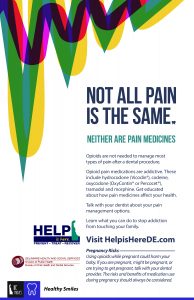
DPH Launches Statewide Campaign to Prevent Opioid Abuse from Starting After Dental Procedures

DOVER — The Delaware Division of Public Health (DPH) is engaging dental providers in the launch of a statewide campaign directed at increasing awareness about the addictive nature of opioid medications used after dental procedures. Dentists are among the leading prescribers of opioid medications, particularly for surgical tooth extractions. In fact, dentists and oral surgeons are commonly in a position to prescribe adolescents their first opioid prescription after the removal of the third molars, also known as “wisdom teeth.” The highest number of dental-related opioid prescriptions are for teenagers ages 14 to 17, followed closely by young adults ages 18 to 24.

DPH has begun distributing a toolkit to every dental office in the state with resources for both dentists and patients to encourage safe and healthy pain management. Included is a provider letter and fact sheet, a patient brochure, and posters for display in dental offices. The campaign drives home the message that “all pain is not the same,” and therefore should be treated effectively without opioids whenever possible. The American Dental Association (ADA) strongly recommends considering non-steroidal anti-inflammatory drugs (NSAIDs) such as Motrin or Aleve as the first-line of therapy for acute pain management.

“Dental professionals have a unique opportunity to help curtail the opioid epidemic by suggesting opioid alternatives for pain management when possible, counseling patients on the risks of opioid use, and educating on proper disposal procedures,” said Dr. Nick Conte, Director of the DPH Bureau of Oral Health and Dental Services (BOHDS).

A 2011 study in the Journal of the American Dental Association (JADA) estimated that dentists are responsible for 12 percent of prescriptions for fast-acting opioid pain relievers, just below general practitioners and internal medicine doctors. The opioid drugs most commonly prescribed by dentists are hydrocodone and oxycodone, which are highly addictive and have the highest potential for abuse.

This statewide campaign supports a larger state initiative to lower the rate of opioid prescriptions, with the ultimate goal to reduce opioid-related overdoses and deaths. In 2018, DPH launched an expanded section on HelpIsHereDE.com for health care providers, loaded with information; tools, such as forms and screening templates; and resources, including patient materials. Patient and dental provider materials from the oral health toolkit have now been added to the health care provider section of the website. HelpIsHereDE.com is a website providing addiction prevention, treatment, and recovery resources and information for individuals, families and health care providers in Delaware.

According to the CDC, Delaware is ranked first in the nation for prescribing high-dose opioids, and is also ranked first for prescribing long-acting opioids. DPH Director Dr. Karyl Rattay says that while a small percentage of providers (1 percent) are writing 32 percent of opioid prescriptions, almost all providers are struggling with how to better help their patients.

“This isn’t just about telling providers what they need to do,” said Dr. Rattay of the expansion of the health care provider section of the website. “It’s about motivating them by telling them why they need to do it. It’s also about providing comprehensive, evolving support to the trusted caregivers in our community. Certainly, the entire crisis surrounding opioid addiction and drug-related deaths doesn’t lie solely in the hands of health care providers, but they are the critical starting point, and offer the greatest potential for impacting our state’s continual move toward safer use of opioids.”

Preliminary estimates for 2018 indicate 419 overdose deaths across the state, an increase of 21 percent from the 2017 total of 345 deaths, according to the Division of Forensic Science. The CDC ranked Delaware number six in the nation for overdose mortality rate in 2017.

If you or a loved one is struggling with addiction in Delaware, call DHSS’ 24/7 Crisis Hotline to be connected to treatment and recovery options. In New Castle County, call 1-800-652-2929. Or in Kent and Sussex counties, call 1-800-345-6785. To search online for treatment and recovery services in Delaware or nearby states, visit www.HelpIsHereDE.com.

A person who is deaf, hard-of-hearing, deaf-blind or speech-disabled can call the DPH phone number above by using TTY services. Dial 7-1-1 or 800-232-5460 to type your conversation to a relay operator, who reads your conversation to a hearing person at DPH. The relay operator types the hearing person’s spoken words back to the TTY user. To learn more about TTY availability in Delaware, visit http://delawarerelay.com.

The Department of Health and Social Services is committed to improving the quality of the lives of Delaware’s citizens by promoting health and well-being, fostering self-sufficiency, and protecting vulnerable populations. DPH, a division of DHSS, urges Delawareans to make healthier choices with the 5-2-1 Almost None campaign: eat 5 or more fruits and vegetables each day, have no more than 2 hours of recreational screen time each day (includes TV, computer, gaming), get 1 or more hours of physical activity each day, and drink almost no sugary beverages.


DPH Announces Two Naloxone Training, Distribution Events in New Castle County

NEW CASTLE (March 28, 2019) – As part of its Community Naloxone Distribution initiative, the Division of Public Health (DPH) will hold two additional community naloxone distribution events in New Castle County next week. This initiative is part of a multi-pronged approach to address the opioid crisis and reduce the number of individuals dying from drug overdoses in Delaware.

In conjunction with National Public Health Week (April 1 through 7, 2019), DPH will distribute free naloxone kits to members of the general public during the following times:

  • Wednesday, April 3, 2019, 11:00 a.m. to 2:30 p.m.,
    Springer Building Gymnasium, DHSS Herman Holloway Campus
    1901 N. Dupont Highway, New Castle, DE 19720
  • Saturday, April 6, 2019, 10:00 a.m. to 2:00 p.m.
    Porter State Service Center509 West 8th St., Wilmington, DE 19801

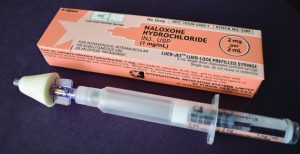
Individuals are encouraged to stop by at any time during either event. Training takes approximately 15 minutes. Each naloxone kit will contain two doses of naloxone, and members of the community who attend these events will receive one-on-one training on how to administer the overdose-reversing medication.

“This training is so important that we wanted to have an event on our main campus that would be open not only to the public, but to state employees as well,” said Dr. Kara Odom Walker, Cabinet Secretary for the Department of Health and Social Services (DHSS). “We all can play a role in reducing harm among people suffering from substance use disorder and, potentially, in saving a life. I urge people to stop by either event to get trained on how to use naloxone.” Secretary Walker, a board-certified family physician, will do the training at the Holloway Campus event and receive a naloxone kit.

The Division of Substance Abuse and Mental Health (DSAMH) also will have representatives on hand to answer any questions about access to treatment for those struggling with substance use disorder.

About 80 percent of all overdoses happen in a private residence – whether it’s the home of the person who overdosed or someone else’s – which is why DPH is encouraging friends, family members, and those struggling with opioid addiction to have naloxone on hand. If family or friends of someone overdosing have naloxone immediately accessible, it can mean the difference between life or death for that person.

Within three to five minutes after administration, naloxone can counteract the life-threatening respiratory depression of an opioid-related overdose and stabilize a person’s breathing, which buys time for emergency medical help to arrive. DPH recommends calling 9-1-1 immediately if you find someone in the midst of a suspected overdose, starting rescue breathing, and then administering naloxone. Naloxone is not a replacement for emergency medical care and seeking immediate help and follow-up care is still vital.

Preliminary estimates for 2018 indicate 419 overdose deaths across the state, an increase of 21 percent from the 2017 total of 345 deaths, according to the Division of Forensic Science. The Centers for Disease Control and Prevention ranked Delaware number six in the nation for overdose mortality rate in 2017.

In 2018, first responders administered 3,728 doses of naloxone, compared to 2,861 in 2017, a 30 percent increase.

Funding for the Community Naloxone Distribution Initiative comes from state funding built into DPH’s budget for the first time in state fiscal year 2019, thanks to the advocacy of Lt. Governor Bethany Hall-Long and the Behavioral Health Consortium. In October, DPH also announced the agency was awarded federal funds to support the purchase of naloxone and other programs for first responders.

Community access to naloxone has increased significantly since 2014 when legislation was enacted making it available to the public. In 2017, Governor John Carney signed additional legislation ensuring pharmacists had the same legal protections as doctors, peace officers and good Samaritans when dispensing the medicine without a prescription.

Information on community training and pharmacy access to naloxone, along with resources regarding prevention, treatment and recovery are available at https://www.helpisherede.com/Get-Help/Overdose-Prevention.


DPH to Distribute Overdose Reversing Medication Naloxone March 20, 2019 in Dover

DOVER – In an effort to reduce the number of individuals dying from drug overdoses in Delaware, the Division of Public Health (DPH) will hold Community Naloxone Distribution events in each county throughout the month of March. DPH will distribute free naloxone kits to members of the general public from 5:30 p.m. to 8:30 p.m., on Wednesday, March 20, 2019, at Delaware Technical Community College, Terry Campus, 100 Campus Drive, Dover, DE 19904. The distribution event will be held in the Corporate Training Center, Rooms 408 and 412. Individuals are encouraged to stop by at any time during the event. Training takes approximately 15 minutes. 

Each naloxone kit will contain two doses of naloxone, and members of the community who attend these events will receive one-on-one training on how to administer the overdose-reversing medication. The Division of Substance Abuse and Mental Health (DSAMH) also will have representatives on hand to answer any questions about access to treatment for those struggling with substance use disorder.

About 80 percent of all overdoses happen in a private residence, whether it’s their own or someone else’s, which is why DPH is encouraging friends, family members, and those struggling with opioid addiction to have naloxone on hand. If family or friends of someone overdosing have naloxone immediately accessible, it can mean the difference between life or death for that person.

Within three to five minutes after administration, naloxone can counteract the life-threatening respiratory depression of an opioid-related overdose and stabilize a person’s breathing, which buys time for emergency medical help to arrive. DPH recommends calling 9-1-1 immediately if you find someone in the midst of a suspected overdose, starting rescue breathing, and then administering naloxone. Naloxone is not a replacement for emergency medical care and seeking immediate help and follow-up care is still vital.

Preliminary estimates for 2018 indicate 419 overdose deaths across the state, an increase of 21 percent from the 2017 total of 345 deaths, according to the Division of Forensic Science. The Centers for Disease Control and Prevention ranked Delaware number six in the nation for overdose mortality rate in 2017.

In 2018, first responders administered 3,728 doses of naloxone, compared to 2,861 in 2017, a 30 percent increase.

Funding for the Community Naloxone Distribution Initiative comes from state funding built into DPH’s budget for the first time in state fiscal year 2019, thanks to the advocacy of Lt. Governor Bethany Hall-Long and the Behavioral Health Consortium. In October, DPH also announced the agency was awarded federal funds to support the purchase of naloxone and other programs for first responders.

Community access to naloxone has increased significantly since 2014 when legislation was enacted making it available to the public. In 2017, Governor John Carney signed additional legislation ensuring pharmacists had the same legal protections as doctors, peace officers and good Samaritans when dispensing the medicine without a prescription.

Information on community training and pharmacy access to naloxone, along with resources regarding prevention, treatment and recovery are available at https://www.helpisherede.com/Get-Help/Overdose-Prevention.

A person who is deaf, hard-of-hearing, deaf-blind or speech-disabled can call the DPH phone number above by using TTY services. Dial 7-1-1 or 800-232-5460 to type your conversation to a relay operator, who reads your conversation to a hearing person at DPH. The relay operator types the hearing person’s spoken words back to the TTY user. To learn more about TTY availability in Delaware, visit http://delawarerelay.com.

Delaware Health and Social Services is committed to improving the quality of the lives of Delaware’s citizens by promoting health and well-being, fostering self-sufficiency, and protecting vulnerable populations. DPH, a division of DHSS, urges Delawareans to make healthier choices with the 5-2-1 Almost None campaign: eat 5 or more fruits and vegetables each day, have no more than 2 hours of recreational screen time each day (includes TV, computer, gaming), get 1 or more hours of physical activity each day, and drink almost no sugary beverages.


Seek Treatment, Access to Naloxone: Three Suspected Heroin Overdose Deaths in Sussex Co. Involving Same Packet Stamp

NEW CASTLE (March 13, 2019) – Health and public safety officials are urging people in active use of heroin or other opioids and their families to seek immediate treatment and acquire the overdose-reversing medication naloxone on hand in the wake of three suspected heroin overdose deaths in five days in Sussex County involving the same packet stamp.

Through death investigations, the Division of Forensic Science identified the same stamp on packets that are suspected of being used by the three individuals or were found at the scenes of their deaths. The division is doing toxicology testing of the substances involved. The stamp is not being identified to prevent people in active use from seeking it.

The three suspected overdose deaths happened in Sussex County between March 9 and March 13, the Division of Forensic Science staff reported. As of today, March 13, the Division of Forensic Science has reported a total of 50 suspected overdose deaths in Delaware this year. Preliminary estimates for 2018 indicate 419 overdose deaths across the state, an increase of 21 percent from the 2017 total of 345 deaths.

“While the Division of Forensic Science determines the particular chemical make-up of the substances involved in these deaths, it is critical that people be aware of the dangers,” Department of Health and Social Services (DHSS) Secretary Dr. Kara Odom Walker said. “If you have a loved one in active use, please have naloxone in your home. If you see someone overdose, call 9-1-1 immediately, begin rescue breathing and administer naloxone, which can reverse the effects of an opioid overdose, and save the person in distress.”

“Naloxone saves lives,” said Division of Public Health Director Dr. Karyl Rattay. “With specific heroin packets appearing to be extremely dangerous, we urge anyone who needs access to naloxone to connect with Brandywine Counseling & Community Services, which operates the syringe services program for the Division of Public Health, attend a Community Naloxone Training class provided by Brandywine Counseling, come to one of the Division of Public Health’s free naloxone distributions or go to a participating pharmacy to buy the overdose-reversing medication. We also urge Delawareans to download OpiRescue Delaware, a new smartphone app that provides lifesaving step-by-step instructions on how to administer naloxone.” For more information, go to www.HelpIsHereDE.com and click on the overdose prevention tab.

In 2018, first responders administered 3,728 doses of naloxone, compared with 2,861 doses in 2017, a 30 percent increase.

Elizabeth Romero, director of the Division of Substance Abuse and Mental Health, urged individuals in active substance use to see a medical provider immediately or call DHSS’ 24/7 Crisis Services Hotline to be connected to trained crisis professionals who can discuss treatment options. In New Castle County, the number is 1-800-652-2929. In Kent and Sussex counties, the number is 1-800-345-6785. Individuals and families also can visit DHSS’ website, www.HelpIsHereDE.com, to find addiction treatment and recovery services in Delaware and nearby states.

Romero encouraged anyone who is using or suffering from addiction to call for help, see a medical provider, or to ask a police officer or another first responder for help. “Too many times, our police officers and other first responders see first-hand the dangers of fentanyl-related overdoses,” she said. “Our first priority is to save lives.”

Under Delaware’s 911/Good Samaritan Law, people who call 9-1-1 to report an overdose and the person in medical distress cannot be arrested for low-level drug crimes.

In 2017, the Division of Forensic Science (DFS) confirmed the presence of fentanyl in 210 of the 345 total fatal overdoses. Fentanyl is a synthetic painkiller that is up to 50 times more potent than heroin. In 2016, fentanyl was confirmed in 109 of the 308 total overdose deaths. The 2018 statistics are expected to be released later this year.

Drug dealers sell fentanyl in a variety of ways, according to the Drug Enforcement Administration (DEA). Dealers sell pure fentanyl in white powder form to users who assume they are buying heroin. They lace cocaine or heroin with fentanyl. And they press fentanyl into pills and pass them off as OxyContin.

When a user ingests fentanyl or a drug laced with fentanyl, it affects the central nervous system and brain. Because it is such a powerful opioid, users often have trouble breathing or can stop breathing as the drug sedates them. If someone is too drowsy to answer questions, is having difficulty breathing, or appears to be so asleep they cannot be awakened, call 9-1-1 immediately, start rescue breathing and administer naloxone if you have it at home.