Meets Growing Demands without Raising Taxes
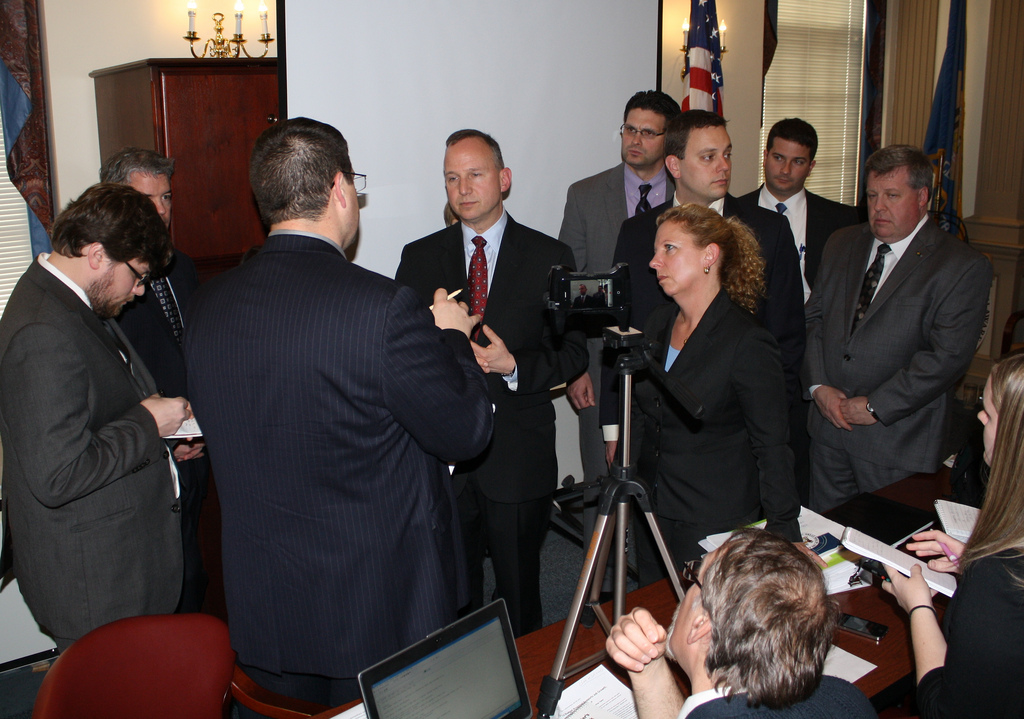
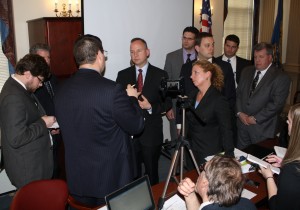
Photos available for media use on Flickr
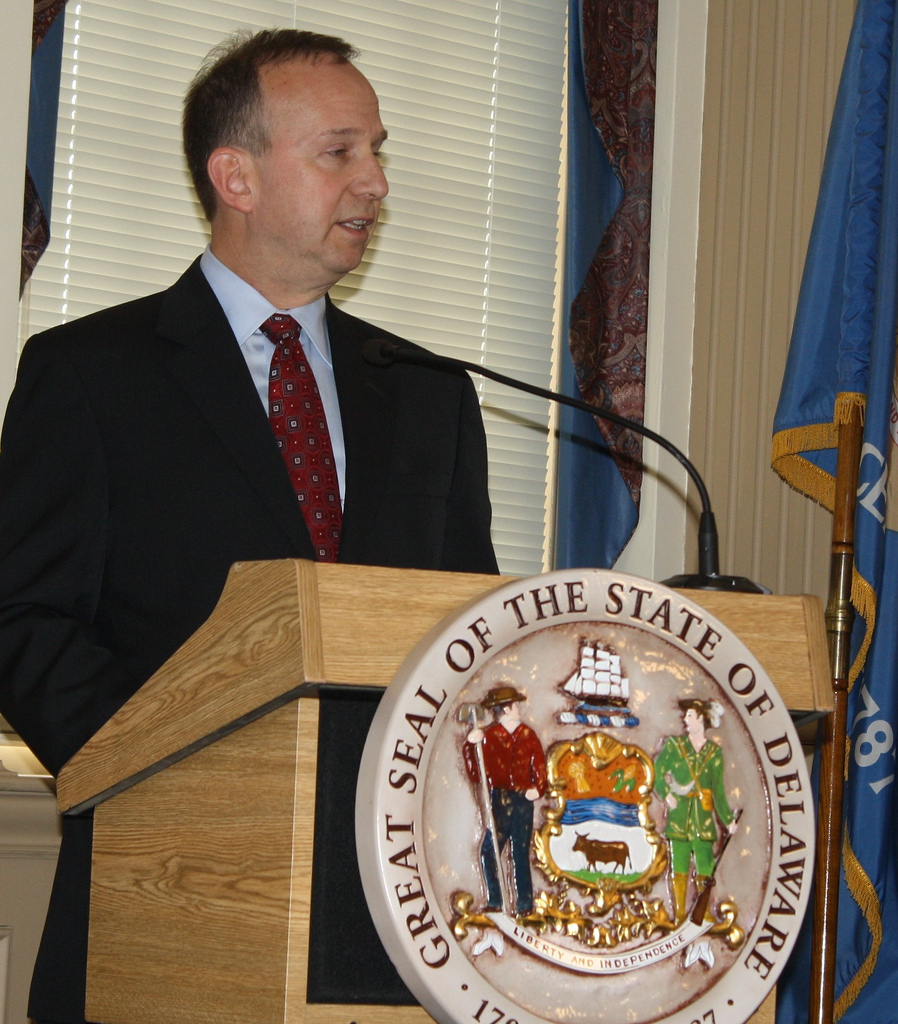
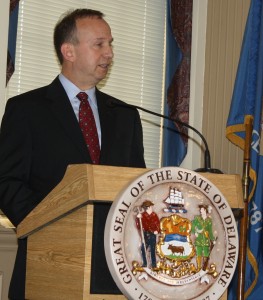
Dover, DE – Governor Jack Markell today unveiled a balanced budget proposal that invests in jobs and public education, keeps the state’s commitment to critical areas like public health and safety and balances without the need to raise taxes or add new fees.
“Budgets are about priorities, and this budget makes clear that our top priorities are encouraging economic growth, making our public schools stronger, and ensuring that we are governing responsibly,” Markell said.
 The budget continues years of efforts to govern responsibly by finding ways to cut costs. The state has cut over 1,000 state employee positions, enacted state employee health and pension reform that should secure over $480 million in savings over a 15-year period; reduced specific operating expenses like state-agency printing and advertising expenses; cut the state’s energy costs through reverse auctions; slashed the state’s fleet by 895 vehicles; and reduced costs by renegotiating state leases. These efforts have helped to reduce expenses while ensuring the state maintained its AAA bond rating, which keeps down the cost of borrowing.
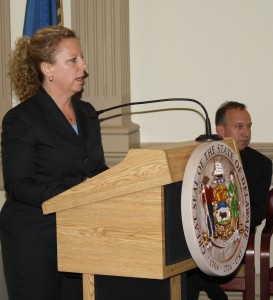
“We remain very focused on investing and spending taxpayer dollars wisely. In order to cover the cost of increasing demands on state government, we must continue to find savings and efficiencies in our state agencies, “ Director Visalli said.
While the recommended budget includes an additional $21.7 million dollars for Medicaid, the Governor made clear during his State of the State and in this budget address that the state will focus this year on bringing down those costs. Over the last 10 years, Medicaid spending has grown 127 percent, to the point where federal and state spending together now exceeds $1.2 billion each year.
“As I mentioned in the State of the State, tackling these spiraling costs – moving from paying for sick care to paying for health care – has to be a priority or we’ll lose the ability in the future to invest in areas like education that are critical to economic growth,” Markell said.
 The budget proposal includes significant investments in public education, including additional state funding for 111 new teacher units in schools, step increases for school employees and salary increases for paraprofessionals. While federal Education Jobs Act funds had helped support local districts this year, the federal government did not renew that program. To support local districts and keep educators working, the Governor’s budget recommends the state replace those lost federal dollars with an additional $27.4 million dollars in state funds, which is the largest single additional investment in the Governor’s budget proposal. Public education also receives a boost in the Capital Budget, which dedicates $116.1 million for school projects.
With additional investments in early childhood education and support for the SEED and Inspire college scholarships, the budget recognizes that education cannot begin the day a child arrives for kindergarten or end the day someone crosses the stage with their high school diploma. The state’s recent success in the federal government’s second Race to the Top contest (the “Early Learning Challenge”) means federal resources will also be available to complement the state’s early childhood investments.
“Great schools are an important factor in our ability to attract new jobs to Delaware now. Great schools that graduate kids who are ready to succeed in work or college are critical to our state’s – and those kids’ – economic future,” Markell said.
 With jobs remaining the Governor’s top priority, the budget proposal makes several investments in economic growth. The Capital Budget would replenish the state’s Strategic Fund, which has helped attract new employers and expand existing workforces at companies like Amazon, Mountaire Farms, Baltimore Aircoil, Nanticoke Hospital, Johnson Controls and PBF Energy, which reopened the Delaware City Refinery. These Strategic Fund resources would also support some of the Governor’s expanded efforts to help small businesses.
“We need to keep focused and keep pushing forward in our efforts to expand economic opportunity and make our state an even better place to start and grow a business,” Markell said. “Companies deciding where to invest and hire also look for places with clean air and water and for places parks and recreational trails that make life for employees and their families healthy and rewarding. Quality of life matters deeply to them because it matters to their workforce. If we overlook them, our state is likely to get overlooked.”
Given the importance quality of life issues can play in economic development, the Governor’s capital budget recommends $13.3 million for a series of Statewide Trails and Pathways; $2.6 million for libraries; a $1.3 million investments in the state’s Clean Water State Revolving Fund and $1.9 million for the Drinking Water State Revolving Fund, each of which will leverage several million in additional federal funds; $4 million for the state’s Housing Development Fund and $2.1 million to redevelop strategic sites like NVF and Fort Dupont. It invests in public-safety projects like the new Delaware State Police Troop 3 in Camden and Troop 7 in Lewes and supports $7.5 million in federal funds for the new Delaware National Guard Armory in Dagsboro with $2.5 in state capital funds.
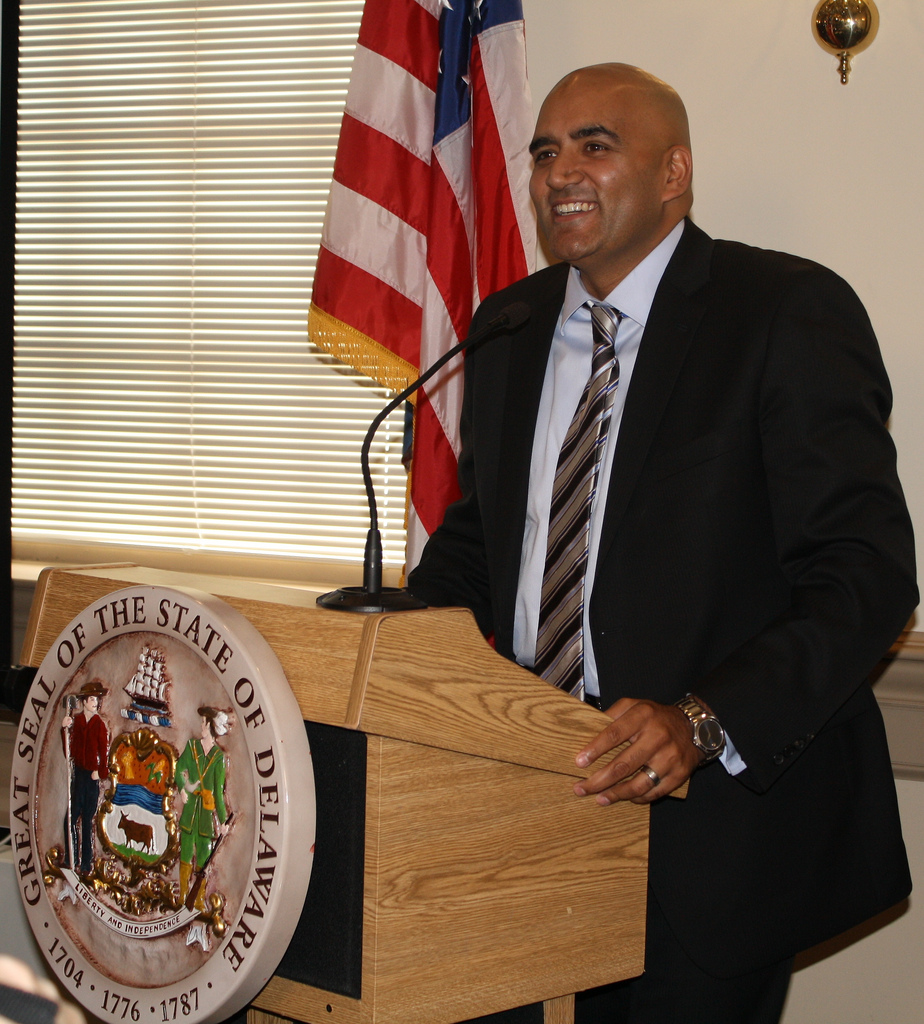
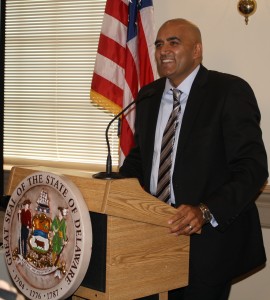 While the unveiling of the Governor’s budget proposal traditionally focused on the Operating and Capital Budgets and was led by the Governor and Ann Visalli, the Director of the Office of Management and Budget, the Department of Transportation’s Secretary Shailen Bhatt included his proposals this year for the state’s Transportation Trust Fund. Bhatt explained the agency’s new approach to operating – called TEAM DelDOT (for Transparent, Efficient, Accountable and Measured) – and new approach to budgeting, which includes more closely aligning agency staff and financial resources with the department’s capital program and operational needs.
“Sound management of our infrastructure and our transportation dollars is an important part of our state’s fiscal health,” Markell said. “DelDOT has made clear their budget priorities are to be realistic and responsible while maintaining a robust capital plan to create jobs and meet the state’s transportation needs.”
The Fiscal Year 2013 Recommended Operating Budget totals $3,544.5 million, an increase of 1.025% over the Fiscal Year 2012 budget. The Fiscal Year 2013 Recommended Bond and Capital Improvements Act totals $448.0 million and the Governor has also recommended a Grants in Aid set-aside of $40.2 million. Total recommended Fiscal Year 2013 General Fund appropriations are $42.6 million less than Fiscal Year 2012.
The Fiscal Year 2013 Operating Budget and Capital Improvements Act fully funds the state’s Rainy Day Fund, adheres to the state’s three-part debt limit, seeks to maintain the state’s AAA bond rating and appropriates only 98% of available revenue.
A power point of the proposal is available online: http://budget.delaware.gov/fy2013/budget_presentation.pdf.