Navarro Announces Ninth Consecutive Workers’ Comp Rate Decrease

Insurance Commissioner Trinidad Navarro announced today that workers’ compensation insurance rates will decrease for the ninth year in a row, effective December 1. The voluntary market is expected to decrease average loss costs by 11.6%, and the residual market will see an average rate reduction of 9.08%. Residual markets are often seen as the ‘last resort’ of coverage due to cost, high risk, or claims history. Trends indicate meaningful movement to the more traditional voluntary market over the last several years.

The announcement follows confirmation of the Delaware Compensation Rating Bureau (DCRB) filing by independent actuaries, and a public hearing with DCRB and the State’s Ratepayer Advocate. Actual savings will vary by policy.

“For nearly ten years, my administration has been able approve rate decreases that help local businesses, and can attract new companies and jobs to Delaware,” said Commissioner Trinidad Navarro. “Delaware’s businesses used to pay some of the highest workers’ compensation premiums in the country, but bold policy changes have been successful in addressing that problem. Our businesses are also doing their part by committing to reducing risk through employee protections and creating safe work environments.”

Workers’ compensation insurance provides coverage when an employee is hurt on the job and can provide medical coverage as well as payments for lost wages if a person is unable to work due to their injury. Lower premiums don’t change the amount of compensation an injured employee receives.

These lower rates are just one component of several department efforts to help businesses. As of year-end 2024, 932 employers were saving even more on their premiums by participating in the department’s Workplace Safety Program, saving approximately $4.9M last year. Eligible businesses can earn a discount on their insurance by successfully undergoing annual safety inspections and complying with recommendations.

Businesses eligible for the Workplace Safety Program are notified each year seven months prior to their renewal date. Organizations interested in participating can access questionnaires online and contact safety@delaware.gov to begin the process. Only benefits can be gained by participating; failure to qualify cannot be the basis for premium increases or sanctions imposed by other safety officials.

View the DCRB website


Medicare Assistance Bureau: Important Reminders Ahead of Open Enrollment

Free one-on-one counseling saved Delawareans $2.2M in 2024

As Medicare Open Enrollment approaches, the Delaware Department of Insurance and its Medicare Assistance Bureau are sharing their annual consumer information update. From October 15 to December 7, consumers can join, switch, or drop a Medicare Prescription Drug Plan (Part D) or Medicare Advantage Plan. The Medicare Assistance Bureau’s free unbiased assistance can help residents determine if making a coverage change is the right choice.

“Our Medicare Assistance Bureau’s impressive track record includes saving Delawareans $2.2 million in 2024, and underscores the crucial need for unbiased, expert guidance during Medicare Open Enrollment. With a variety of options, annual plan changes, and federal updates, it’s vital that beneficiaries take advantage of our free services to ensure their coverage meets their health and financial needs” said Insurance Commissioner Trinidad Navarro.

“Educating and empowering Medicare beneficiaries about coverage, cost, and communications is a critical component of our work,” said Bureau Director Lakia Turner, who urged to carefully assess contact received during the Medicare Open Enrollment window. “Marketing and solicitations rise dramatically in the fall months, so be wary of bad actors requesting your Medicare information and look out for plans or promises that sound too good to be true. Our team can help you cut through the noise by answering your questions and identifying the best plan for your needs.”

In addition to scheduled phone and virtual appointments, by-appointment weekly counseling windows will be offered in-person at Department of Insurance offices from October 20 to November 20:

Wednesdays from 9:30AM-3:00PM at 503 Carr Road, Suite 303, Wilmington DE 19809

Thursdays from 9:30AM-3:00PM at 28 The Circle, Suite 1, Georgetown, DE 19947

Tuesdays from 9:00AM-3:30PM at 1351 West North St., Suite 101, Dover, DE 19904

Appointments for in-person services are required; walk-ins cannot be accommodated. To schedule or receive more information, residents should contact the Bureau at (302) 674-7364.

Top Tips for a Successful Medicare Open Enrollment

1. Know that enrolling in a Medicare Advantage plan means it becomes your primary coverage. Original Medicare will no longer pay for services. You will receive a new ID card from the new plan, and should store your Original Medicare card in a safe place.

2. When moving from Original Medicare to a Medicare Advantage plan, be prepared to pay both a monthly Medicare Advantage premium and a monthly Medicare Part B premium.

3. Medicare Advantage plans do not automatically give you “more money in your Social Security check every month.” To qualify, you must be eligible for the Medicare Savings Program by having an income below Medicaid limits.

4. Check that additional benefits, like dental, vision, hearing, fitness, or over-the-counter medications are actually accessible if offered. Some network providers of these services may be farther away than anticipated, including in neighboring states, so only factor them into your decision if you feel they are usable.

5. Know that premium costs aren’t the only out-of-pocket costs you may face. Medicare Advantage plans may have co-pays or cost-sharing that differ from Original Medicare.

6. Call your preferred healthcare providers and facilities to understand if your prospective plan contracts with them. You may experience additional out-of-pocket expenses, service denial, or referral requirements if providers are considered out of network.

7. Check if a prospective plan is a Health Maintenance Organization (HMO) or Preferred Provider Organization (PPO). HMO plans require healthcare to be completed by a provider contracted with the plan’s network, otherwise the consumer will need a referral. PPO plans have both in-network and out of network providers and facilities, with consumer costs differing based on the network. HMO and PPO plans are not Medicare Supplement Plans, and may have out-of-pocket costs each visit.

8. Check if the plan provides Prescription Drug (Part D) coverage that meets your needs.

9. Be aware that in most cases, enrollment locks a person into a plan for the full upcoming calendar year.

10. Scrutinize any contact carefully during Medicare Open Enrollment to ensure it is from a known, credible source. Commercials, cold calls, and other contact may be scams or can provide deliberately misleading information about a plan.

Important Reminder- Federal Programs

When selecting 2026 coverage, the Medicare Prescription Payment Plan works with a beneficiary’s current drug coverage to help manage out of-pocket Medicare Part D drug costs by spreading them across the calendar year. Anyone with a Medicare drug plan or Medicare health plan with drug coverage (like a Medicare Advantage Plan with drug coverage) can voluntarily use this payment option.

If this payment option is selected, consumers will continue to pay their plan premium (if they have one) each month and will get a bill from the health or drug plan to pay for the prescription drugs instead of paying the pharmacy. There’s no cost to participate in the Medicare Prescription Payment Plan. In 2026, Part D enrollees’ out-of-pocket drug costs will be capped at $2,100. This amount will be indexed to rise each year at the rate of growth in per capita Part D costs.

Medicare can negotiate directly with manufacturers for the price of certain high-spending brand-name Medicare Part B and Part D drugs that don’t have generic versions available. 10 additional drugs will be subject to negotiated costs in the coming year as announced by the federal government.

The Centers for Medicare & Medicaid Services will be sunsetting the Medicare Advantage Value-Based Insurance Design program at the end of 2025.

About the Delaware Medicare Assistance Bureau

The Delaware Medicare Assistance Bureau provides free one-on-one health insurance counseling for people eligible for Medicare. Residents can call DMAB at 1(800) 336-9500 or (302) 674-7364 to set up a free, confidential session or visit the DMAB website for important educational resources. Counselors can assist with Medicare, Medicare Advantage, Medigap (Medicare Supplement Insurance), long-term care insurance, billing issues, prescription savings, and much more.

Medicare Advantage plans are regulated at the federal level, though the Insurance Commissioner and his peers are advocating for increased state regulatory authority.

Be aware of non-compliant alternative health plans


$450k in Mental Health Parity Penalties Issued to UnitedHealthcare

Insurer penalties pass the $2M mark in total

Today the Delaware Department of Insurance announced the completion of a follow-up Mental Health Parity and Addiction Equity Act (“Mental Health Parity”) examination of UnitedHealthcare Insurance Company. This investigation also included reviews of complaint and grievance handling, policyholder services, claims, utilization review, medical necessity criteria, pharmacy review, and oversight of contracted Pharmacy Benefit Managers and Third-Party Administrators. In response to substantive findings, including repeated issues, the carrier has been issued a corrective action plan and assessed a penalty of $450,000.

“This comprehensive re-examination of multiple areas of UnitedHealthcare’s treatment of policyholders seeking mental or behavioral health care and prescriptions will result in much needed corrections in insurer activity. We must remain vigilant in ensuring compliance with our consumer-friendly laws,” said Insurance Commissioner Trinidad Navarro. “Protecting consumers and promoting equity in health care access remains a top priority for our team, even considering the federal government’s decision not to conduct compliance on Mental Health Parity. My office has been, and will remain, the primary compliance entity for commercial carriers operating here.”

Mental Health Parity laws, which exist both at the state and federal levels, aim to eliminate coverage discrimination between policyholders seeking mental illness or substance abuse care and those seeking physical care. A lack of parity can prevent a person from pursuing needed care due to cost or limited access or otherwise make access more expensive or more time intensive than medical visits. Department examinations are critical to uncovering parity issues as consumers may not be aware if they are experiencing disparate treatment when seeking care.

Violations found in policies and practices during this exam revolved around a lack of parity between coverage for procedures and medications, and for preauthorization requirements. Improper application of Step-Therapy Protocol exceptions, misapplication of non-formulary, formulary, and excluded drug definitions, and improper application of prior authorization for medication-assisted treatment were documented. In addition, UHC applied a broader definition of Specialty Drug than the Delaware Code authorizes, and its automated prescription drug processing did not contain mental health drugs.

Investigators noted that the carrier failed to use the full set of American Society of Addiction Medicine (ASAM) criteria to provide unlimited medically necessary coverage for treatment. ASAM criteria are comprehensive clinical standards which guide the placement, level of care, and treatment plan for persons with substance use disorders. Additionally, the company failed to comply with reporting requirements – the required analyses were not sufficiently specific, detailed, and reasoned to demonstrate whether the processes, strategies, evidentiary standards, and other factors were comparable and applied no more stringently than medical/surgical benefits.

The examination reviewed activity over a 24-month period. Some violations were cited in prior examinations, enhancing the level of penalty the company was issued. Inclusive of this reexamination, Delaware insurers have been assessed a total of $2.11M since enforcement of Mental Health Parity began. These dollars go to the state’s General Fund.

Additional Findings

The UnitedHealthcare examination included components of traditional, regularly scheduled exams in addition to the Mental Health Parity review. Findings included: noncompliance with arbitration and appeal acknowledgement and transmission timelines; failure to complete speedy review of grievances; imposition of lower-than-minimum claim reimbursement submission timeline; failure to process clean claims within 30 days of receipt; failure to effectuate prompt, fair and equitable settlements of claims in which liability has become reasonably clear; noncompliance with pre-authorization adverse determination notification standards and preauthorization minimum lengths for care, pharmaceuticals, and chronic or long-term conditions; use of unfair claim settlement practices; violations of infertility coverage statutes; and requiring drugs which do not meet the definition of Specialty Drugs to be obtained through company-designated pharmacies.

The scope of the examination was expanded while in process to include the insurer’s application and monitoring of medical necessity criteria. This, in part, included investigation of the use of automation and Artificial Intelligence in making medical necessity determinations. No exceptions were noted.

Positive findings of compliance were noted in areas such as management of Pharmacy Benefit Manager and Third-Party Administrator relationships.


Insurance Commissioner: Vaccine Insurance Coverage in Delaware

In the wake of federal changes, Insurance Commissioner Trinidad Navarro and the Delaware Department of Insurance wish to inform residents about carrier’s intentions regarding insurance coverage for immunizations.

“Vaccines save lives,” said Insurance Commissioner Trinidad Navarro. “They save money, preventing costly diseases and conditions, keeping insurance and care affordable. They save health care capacity, a critical resource to retain as we face provider shortages. But again, and most importantly: they save lives.”

“Residents are reaching out, concerned that they will lose coverage for and access to the immunizations we rely on to keep our communities healthy. I am proud to share that several of our commercial carriers have committed to continuing to provide their current level of vaccine coverage to policyholders, and we continue to work to ensure consumers have access to information from all insurers operating in Delaware.”

AHIP, America’s Health Insurance Plans, a national association, stated “As we navigate an evolving health care landscape, maintaining robust immunization coverage continues to be a top priority for protecting both individual and community health. We are committed to ongoing coverage of vaccines to ensure access and affordability for this respiratory virus season. We encourage all Delaware residents to talk to their health care provider about vaccines.”

Aetna CVS Health said “From an Aetna perspective, we continue to provide coverage for approved vaccines, including COVID-19, in compliance with applicable state and federal cost-sharing requirements. All members of insured plans voluntarily choosing to vaccinate against COVID-19 may do so with no cost sharing.”

“In addition to offering fully insured plans, Aetna also administers benefits on behalf of thousands of self-funded employers. As with all coverage decisions, self-funded employers determine their own insurance coverage as allowed under various federal and state laws.”

AmeriHealth Caritas said “AmeriHealth Caritas supports our members who choose to get vaccinated by providing vaccine coverage. This coverage is in line with the preventive care service requirements in the Affordable Care Act (ACA). We encourage all Delaware residents to talk to their healthcare providers regarding vaccinations.”

Delaware First Health, also known as Centene, Celtic, and Ambetter Health of Delaware, reported that “We’re committed to providing coverage for evidence-based treatments, including vaccines. Ambetter Health of Delaware continues to cover COVID-19 and other vaccinations in alignment with public health guidance, and we encourage members to consult with their physician about all care needs, including vaccinations.”

Highmark shared “Highmark has not changed our vaccine coverage or medical policies on vaccinations. Members should be always consulting with their physician about personal health care needs.”

UnitedHealthcare stated “There have been no immediate changes to vaccine coverage for our commercial members. We continue to monitor and evaluate the latest guidance.”

Cigna did not share commitments at the time of this advisory but is a member of AHIP. This web posting will be updated if shared at a later date, or if carriers modify their coverage determinations.

The Department of Insurance will continue to work with state partners to ensure that vaccine coverages are not diminished. In their commitments to coverage, insurers must provide adequate access to the immunizations offered. Sites of care may shift as health providers and pharmacies determine their paths forward, but carriers will work to ensure continued access even at different network providers. Should insurers’ coverage change, regulatory and/or legislative requirements will be developed.

This consumer advisory does not advise on coverage outside of the commercial market, such as through a self-insured employer, or Medicare Advantage plans, which are not regulated by the Department of Insurance.


Department of Insurance Issues First-Ever GLP-1 Report

While utilization rises, rebates mean that insurers and employers break-even

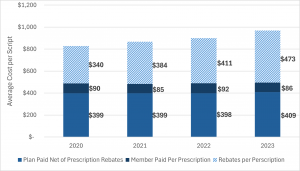
Use of GLP-1s – the popular medications to treat Type 2 Diabetes and obesity – nearly doubled among Delaware’s fully-insured commercial members from 2020 to 2023, according to a new first-in-the-nation analysis from the Department of Insurance’s Office of Value-Based Health Care Delivery. Data shows the expense of the medications was nearly fully balanced by manufacturer rebates.“It’s long been suggested that the cost of GLP-1s have been a primary contributor to rising health insurance costs, but this data shows that simply is not the case. Considering the rebates from drug manufacturers and other entities, even with increased utilization, they are not a substantive cost driver,” said Insurance Commissioner Trinidad Navarro. “While we can’t necessarily quantify the other savings they produce, for example by managing chronic conditions, preventing emergency care, and reductions in other medications, GLP-1 medications are proving to be an important cost-effective tool in managing obesity and diabetes.”

A simplified version of a chart from the report showing average cost of prescription, broken into insurer payment, insured payment, and rebates

Prices for the medications were relatively flat, after subtracting rebates, the analysis of data provided to the OVBHCD by Delaware’s three largest pharmacy benefit managers found. Rebates are payments typically made by a pharmaceutical manufacturer to a pharmacy benefit manager, who then shares all or some of rebate with the health insurer or employer.

Driven by the increase in use, total spending on GLP-1 medications more than doubled over the reviewed period. GLP-1 medications accounted for about 6 percent of all pharmacy spending for the Delaware commercial fully insured market. The trends in Delaware mirror those nationally.

In the coming months, the OVBHCD will expand its analysis of pharmacy spending to include all medications, offering further context to pharmacy spending among the commercial, fully insured population.

This report does not provide State of Delaware Group Health Insurance Plan GLP-1 data. Such data is not available in a manner that is inclusive of rebates, and solely reporting on spending can be inherently misleading due to the significant value of rebates received and fully retained by the State. In future contracts, the State’s PBM will be required to submit OVBHCD pharmacy data templates so information can be similarly analyzed by this expert team.

The Department of Insurance remains committed to supporting evidence-based care, improving access to effective treatments, and promoting transparency in the health care market. The Office’s findings will inform ongoing conversations about how to balance innovation with affordability in Delaware’s health care system.

Access the Report: Utilization Not Cost of GLP-1 Medications Drives Increased Spending

Office of Value-Based Health Care Delivery Website