Delaware News


Delaware Officials Close Out National Recovery Month, Highlight Recovery Community Centers Across the State

Delaware Health and Social Services | Division of Substance Abuse and Mental Health | Newsroom | Date Posted: Monday, September 28, 2026


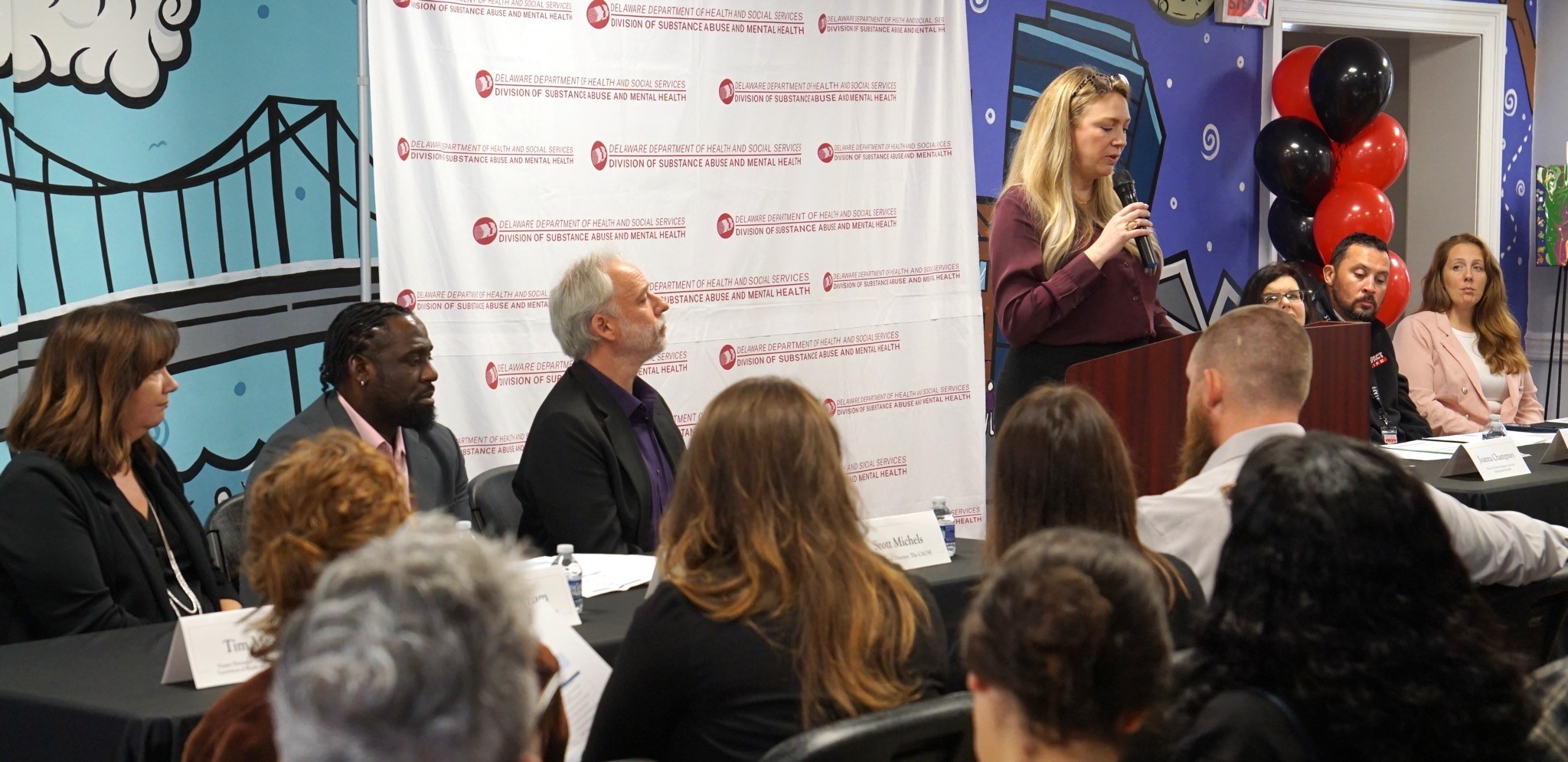
Woman stands at brown podium in front of a crowd.

WILMINGTON – Leaders from the Delaware Department of Health and Social Services (DHSS), its Division of Substance Abuse and Mental Health (DSAMH), recovery service providers and community partners gathered Monday at Impact Life’s Wilmington Recovery Café to highlight Recovery Community Centers and the role they play in supporting Delawareans in recovery as the state closes out National Recovery Month. The briefing included representatives from Impact Life, Horizon House and The CAUSE.

Recovery Community Centers are community-based spaces that provide peer recovery support, resources, wellness opportunities and connections to services for people at different stages of recovery from substance use disorders and mental health challenges. While centers operate under different models, they share a focus on helping people build connections, develop skills and access resources as they move forward in recovery.

“Recovery doesn’t happen only in a treatment setting. It happens every day in our homes, workplaces and communities, and people need support that meets them where they are,” said DSAMH Director Joanna Champney. “Recovery Community Centers create places where people can connect with peers who understand their experiences, find practical resources and build the relationships, stability and sense of belonging that can help sustain recovery. There is no single path to recovery, and our goal is to make sure Delawareans have different doors they can walk through when they are ready for support.”

DSAMH currently supports Recovery Community Centers operating under two primary models: low-barrier drop-in centers and Recovery Cafés. Drop-in centers allow people to access peer services and resources without an appointment or an existing connection to treatment. Across the two models, DSAMH supports seven Recovery Community Centers statewide.

Depending on the location, services may include showers, employment assistance, financial planning and connections to treatment and other community resources. DSAMH supports Horizon House’s drop in Center in Wilmington, as well as Brandywine Counseling and Community Services, Inc.’s Dover and Milford locations.

Recovery Cafés provide a more structured, peer-based model centered on ongoing participation in a recovery community. Depending on the location, activities may include recovery groups, wellness activities, and social activities for people in recovery.  DSAMH supports Impact Life’s Recovery Cafés in Wilmington and Newark.  DSAMH also supports additional Impact Life Recovery Hubs in Georgetown and Seaford. Network Connect also operates a Recovery Café in Dover.

Peer Recovery Specialists are central to the work of the centers, using lived experience along with professional training to help people identify goals, advocate for themselves, navigate systems and connect with resources that can support their recovery.

To help address behavioral health needs of Delawareans, DHSS has several ways for individuals or their family members to connect:

  • Call the 24/7 Delaware Hope Line at 1-833-9-HOPEDE or 1-833-946-7333 – a single point of contact where callers can connect to a variety of resources and information, including support from clinicians and peer specialists plus crisis assistance.
  • Stop by one of DHSS’ Bridge Clinics for an in-person assessment.
  • Visit TreatmentConnection.com to find out which treatment providers are located near you.
  • Visit HelpIsHereDE.com, DHSS’ one-stop website where Delawareans can search for treatment services and resources in Delaware or nearby states.
  • Call 988 if the individual is in crisis and needs immediate support.
  • Call 911 if someone has overdosed and needs emergency medical attention.
  • Learn where to find Narcan training, get the medication through the mail, and download the OpiRescueDE App.
image_printPrint

Graphic that represents delaware news on a mobile phone

Keep up to date by receiving a daily digest email, around noon, of current news release posts from state agencies on news.delaware.gov.

Here you can subscribe to future news updates.

Delaware Officials Close Out National Recovery Month, Highlight Recovery Community Centers Across the State

Delaware Health and Social Services | Division of Substance Abuse and Mental Health | Newsroom | Date Posted: Monday, September 28, 2026


Woman stands at brown podium in front of a crowd.

WILMINGTON – Leaders from the Delaware Department of Health and Social Services (DHSS), its Division of Substance Abuse and Mental Health (DSAMH), recovery service providers and community partners gathered Monday at Impact Life’s Wilmington Recovery Café to highlight Recovery Community Centers and the role they play in supporting Delawareans in recovery as the state closes out National Recovery Month. The briefing included representatives from Impact Life, Horizon House and The CAUSE.

Recovery Community Centers are community-based spaces that provide peer recovery support, resources, wellness opportunities and connections to services for people at different stages of recovery from substance use disorders and mental health challenges. While centers operate under different models, they share a focus on helping people build connections, develop skills and access resources as they move forward in recovery.

“Recovery doesn’t happen only in a treatment setting. It happens every day in our homes, workplaces and communities, and people need support that meets them where they are,” said DSAMH Director Joanna Champney. “Recovery Community Centers create places where people can connect with peers who understand their experiences, find practical resources and build the relationships, stability and sense of belonging that can help sustain recovery. There is no single path to recovery, and our goal is to make sure Delawareans have different doors they can walk through when they are ready for support.”

DSAMH currently supports Recovery Community Centers operating under two primary models: low-barrier drop-in centers and Recovery Cafés. Drop-in centers allow people to access peer services and resources without an appointment or an existing connection to treatment. Across the two models, DSAMH supports seven Recovery Community Centers statewide.

Depending on the location, services may include showers, employment assistance, financial planning and connections to treatment and other community resources. DSAMH supports Horizon House’s drop in Center in Wilmington, as well as Brandywine Counseling and Community Services, Inc.’s Dover and Milford locations.

Recovery Cafés provide a more structured, peer-based model centered on ongoing participation in a recovery community. Depending on the location, activities may include recovery groups, wellness activities, and social activities for people in recovery.  DSAMH supports Impact Life’s Recovery Cafés in Wilmington and Newark.  DSAMH also supports additional Impact Life Recovery Hubs in Georgetown and Seaford. Network Connect also operates a Recovery Café in Dover.

Peer Recovery Specialists are central to the work of the centers, using lived experience along with professional training to help people identify goals, advocate for themselves, navigate systems and connect with resources that can support their recovery.

To help address behavioral health needs of Delawareans, DHSS has several ways for individuals or their family members to connect:

  • Call the 24/7 Delaware Hope Line at 1-833-9-HOPEDE or 1-833-946-7333 – a single point of contact where callers can connect to a variety of resources and information, including support from clinicians and peer specialists plus crisis assistance.
  • Stop by one of DHSS’ Bridge Clinics for an in-person assessment.
  • Visit TreatmentConnection.com to find out which treatment providers are located near you.
  • Visit HelpIsHereDE.com, DHSS’ one-stop website where Delawareans can search for treatment services and resources in Delaware or nearby states.
  • Call 988 if the individual is in crisis and needs immediate support.
  • Call 911 if someone has overdosed and needs emergency medical attention.
  • Learn where to find Narcan training, get the medication through the mail, and download the OpiRescueDE App.
image_printPrint

Graphic that represents delaware news on a mobile phone

Keep up to date by receiving a daily digest email, around noon, of current news release posts from state agencies on news.delaware.gov.

Here you can subscribe to future news updates.