
DNREC Awards $523,000 in Community Environmental Grant Funding for 2027
Department of Natural Resources and Environmental Control | Newsroom | Date Posted: Monday, October 19, 2026

Department of Natural Resources and Environmental Control | Newsroom | Date Posted: Monday, October 19, 2026
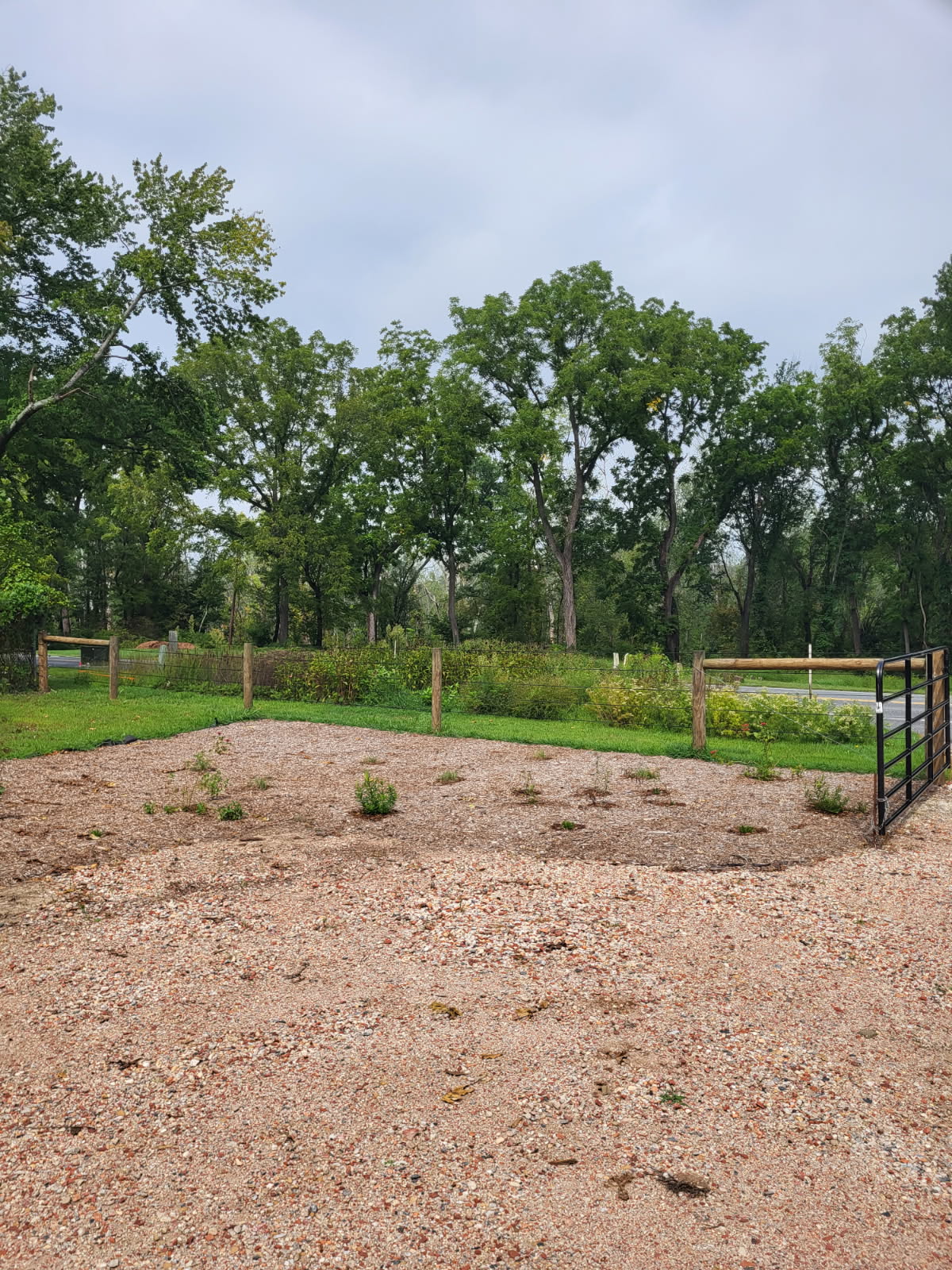
The Lenape Tribe used CEPF funds to remove invasive trees, mitigate erosion, and initiate reforestation at the Deerfield Property, a brownfield site due to its former use as a police shooting range. The tribe can now access natural areas on this historic property. /Delaware DNREC photo
Fund Now Returns More Penalty Money to Areas
Where Delaware Environmental Violations Occurred
Twelve Delaware community projects will receive a total of $523,179 in 2027 from grants awarded through the Community Environmental Project Fund (CEPF), administered by the Department of Natural Resources and Environmental Control. The CEPF supports projects that mitigate pollution, enhance the environment and create recreational opportunities for affected communities.
By state law, DNREC withholds a portion of the money collected through fines and penalties for environmental violations and returns it to communities where the violations occurred. CEPF grants are competitively awarded to organizations for community environmental projects.
House Bill 210, also known as the Pollution Accountability Act, was sponsored in 2025 by Reps. Larry Lambert, Melissa Minor Brown, Frank Burns, Sophie Phillips and Madinah Wilson-Anton along with Sen. Nicole Poore, and signed by Governor Matt Meyer. The legislation increased the percentage of penalty funds that are returned to communities from 25% to 40%. The updated law also gives preference to projects located within two miles of where an environmental violation occurred.
Since 2004, the CEPF program has invested $4.76 million in 129 community grant projects across Delaware. The CEPF grants focus on environmental enhancement, creating new recreational opportunities and addressing pollution mitigation.
“The penalty money the CEPF program has invested in these community projects, particularly in the last few years, attests to the State’s and DNREC’s commitment to environmental justice,” said DNREC Secretary Greg Patterson. “That commitment is a priority for DNREC as we help empower communities to shape or reshape their environment.”
The DNREC Environmental Justice Office, which manages the CEPF grant program, received 60 applications for 2027 grant funding, the highest number to date for the program since it began in 2004.
The applications are “evidence that community groups and municipalities are taking action to improve their quality of life and to protect and bolster their environment,” said Dr. Katera Moore, DNREC’s environmental justice coordinator. “Additional funding through the Pollution Accountability Act also reflects how the State and DNREC are marshalling more resources to make redress to communities impacted by environmental pollution.”
In 2025, the Lenape Indian Tribe of Delaware was awarded $25,000 in CEPF funding for restoring natural beauty to the tribal government’s historic 11.5-acre tract of land in Cheswold in Kent County known as the Deerfield Property. “The Lenape Indian Tribe of Delaware is grateful to DNREC’s Community Environmental Project Fund for partnering with our tribal government to make improvements to our Deerfield property,” said Lenape Tribal Leader Dennis Coker.
He credited the grant for providing “a solid foundation on which to build renewed appreciation for outdoor spaces,” including upland areas and freshwater wetland features. “In addition to our tribal community, our many volunteers and supporters will share the benefits of this very successful project,” Coker said. “Wani’shi!” (“Thank you!” in the Lenape language).
The 12 projects receiving CEPF grants for 2027 can be found on the de.gov/cepf webpage, as can information about past CEPF projects.
About DNREC
The Delaware Department of Natural Resources and Environmental Control protects and manages the state’s natural resources, protects public health, provides outdoor recreational opportunities and educates Delawareans about the environment. For more information, visit the website and connect with @DelawareDNREC on YouTube, Facebook, Instagram, X or LinkedIn
Media contacts: Michael Globetti, michael.globetti@delaware.gov; Nikki Lavoie, nikki.lavoie@delaware.gov
###

Keep up to date by receiving a daily digest email, around noon, of current news release posts from state agencies on news.delaware.gov.
Here you can subscribe to future news updates.
Department of Natural Resources and Environmental Control | Newsroom | Date Posted: Monday, October 19, 2026
The Lenape Tribe used CEPF funds to remove invasive trees, mitigate erosion, and initiate reforestation at the Deerfield Property, a brownfield site due to its former use as a police shooting range. The tribe can now access natural areas on this historic property. /Delaware DNREC photo
Fund Now Returns More Penalty Money to Areas
Where Delaware Environmental Violations Occurred
Twelve Delaware community projects will receive a total of $523,179 in 2027 from grants awarded through the Community Environmental Project Fund (CEPF), administered by the Department of Natural Resources and Environmental Control. The CEPF supports projects that mitigate pollution, enhance the environment and create recreational opportunities for affected communities.
By state law, DNREC withholds a portion of the money collected through fines and penalties for environmental violations and returns it to communities where the violations occurred. CEPF grants are competitively awarded to organizations for community environmental projects.
House Bill 210, also known as the Pollution Accountability Act, was sponsored in 2025 by Reps. Larry Lambert, Melissa Minor Brown, Frank Burns, Sophie Phillips and Madinah Wilson-Anton along with Sen. Nicole Poore, and signed by Governor Matt Meyer. The legislation increased the percentage of penalty funds that are returned to communities from 25% to 40%. The updated law also gives preference to projects located within two miles of where an environmental violation occurred.
Since 2004, the CEPF program has invested $4.76 million in 129 community grant projects across Delaware. The CEPF grants focus on environmental enhancement, creating new recreational opportunities and addressing pollution mitigation.
“The penalty money the CEPF program has invested in these community projects, particularly in the last few years, attests to the State’s and DNREC’s commitment to environmental justice,” said DNREC Secretary Greg Patterson. “That commitment is a priority for DNREC as we help empower communities to shape or reshape their environment.”
The DNREC Environmental Justice Office, which manages the CEPF grant program, received 60 applications for 2027 grant funding, the highest number to date for the program since it began in 2004.
The applications are “evidence that community groups and municipalities are taking action to improve their quality of life and to protect and bolster their environment,” said Dr. Katera Moore, DNREC’s environmental justice coordinator. “Additional funding through the Pollution Accountability Act also reflects how the State and DNREC are marshalling more resources to make redress to communities impacted by environmental pollution.”
In 2025, the Lenape Indian Tribe of Delaware was awarded $25,000 in CEPF funding for restoring natural beauty to the tribal government’s historic 11.5-acre tract of land in Cheswold in Kent County known as the Deerfield Property. “The Lenape Indian Tribe of Delaware is grateful to DNREC’s Community Environmental Project Fund for partnering with our tribal government to make improvements to our Deerfield property,” said Lenape Tribal Leader Dennis Coker.
He credited the grant for providing “a solid foundation on which to build renewed appreciation for outdoor spaces,” including upland areas and freshwater wetland features. “In addition to our tribal community, our many volunteers and supporters will share the benefits of this very successful project,” Coker said. “Wani’shi!” (“Thank you!” in the Lenape language).
The 12 projects receiving CEPF grants for 2027 can be found on the de.gov/cepf webpage, as can information about past CEPF projects.
About DNREC
The Delaware Department of Natural Resources and Environmental Control protects and manages the state’s natural resources, protects public health, provides outdoor recreational opportunities and educates Delawareans about the environment. For more information, visit the website and connect with @DelawareDNREC on YouTube, Facebook, Instagram, X or LinkedIn
Media contacts: Michael Globetti, michael.globetti@delaware.gov; Nikki Lavoie, nikki.lavoie@delaware.gov
###
Keep up to date by receiving a daily digest email, around noon, of current news release posts from state agencies on news.delaware.gov.
Here you can subscribe to future news updates.
Delaware's Governor
State Agencies
Elected Officials
General Assembly
Delaware Courts
State Employees
Cities & Towns
Delaware State Code
State Regulations
Business First Steps
Phone Directory
Locations Directory
Public Meetings
Voting & Elections
Transparency
Delaware Marketplace
Tax Center
Personal Income Tax
Privacy Policy
Weather & Travel
Contact Us
Corporations
Franchise Tax
Gross Receipts Tax
Withholding Tax
Delaware Topics
Help Center
Mobile Apps
E-mail / Text Alerts
Social Media

Built by the Government Information Center
©MMXXVI Delaware.gov
