
DPH Confirms First Positive Measles Case in Over a Decade
Newsroom | Date Posted: Monday, July 20, 2026

Newsroom | Date Posted: Monday, July 20, 2026
DOVER, DEL. (July 20, 2026) – The Delaware Division of Public Health (DPH) is reporting its first confirmed measles case in more than a decade. A sample was tested and confirmed positive today. Extensive contact tracing is ongoing to identify anyone exposed to the individual. DPH will notify people who were identified as exposed to confirm whether they have been vaccinated against measles, provide educational resources, and to recommend treatment when necessary. More information will be forthcoming if contact tracing reveals any known public exposures.
The individual who tested positive is an unvaccinated adult male in Kent County. DPH is unable to provide more details about the individual who tested positive at this time due to medical privacy restrictions.
Delawareans are encouraged to confirm their vaccination status as well as the status of their children. If they are unsure of their vaccination status, they can visit the DelVAX Public Portal and view their personal profile. Individuals may also contact their primary health care provider for additional details if they are unable to obtain their records on DelVAX.
Generally, anyone showing any symptoms of measles should seek immediate health care by contacting their primary care provider. If symptoms are severe, they should seek immediate care at the nearest emergency department. Prior to going to any health care facility, the individual should notify providers and medical transport that they or their child were exposed to measles. If you do not have a provider, contact a public health clinic.
About the MMR Vaccine
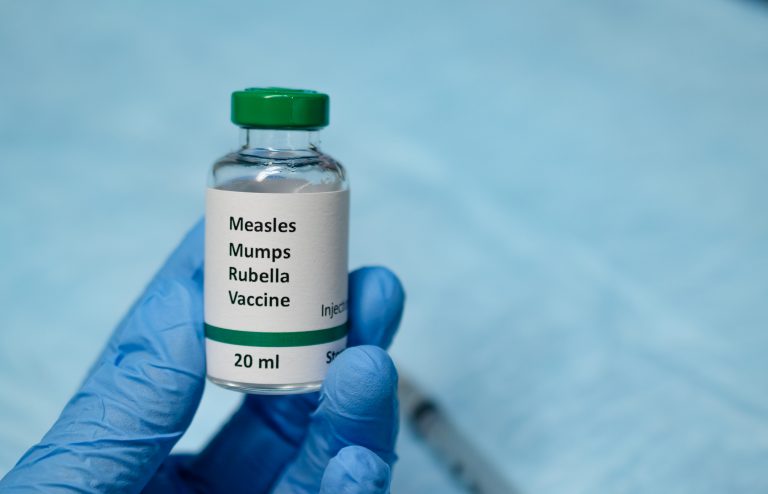
The MMR vaccine is proven safe and effective at preventing measles having been administered for over five decades. Testing shows the MMR vaccine to be 97% effective at preventing measles for those who have received two doses of the MMR vaccine and are not severely immunocompromised. Children should get their first dose of vaccine between 12 and 15 months of age and their second dose between 4 and 6 years of age. If you have not received both doses by age 6, you should get your first or second dose as soon as possible. Infants 6 to 11 months who are traveling internationally or who are in an area experiencing a measles outbreak or exposure should receive one early dose of MMR vaccine. Vaccinations are available to both adults and children at many pharmacies, federally qualified health centers (FQHCs), and providers throughout Delaware and also at public health clinics for the uninsured or underinsured. Individuals should contact their preferred facility in advance to confirm supply and availability.
Generally, you are considered protected (immune) if you were:
• Born before 1957, or
• Given a laboratory test that confirmed that you had measles at some point in your life, or
• Given a laboratory test that confirmed you are immune to measles, or
• Have received two doses of measles-containing vaccine (usually given as measles, mumps, rubella (MMR) vaccine).
Where to Get Vaccinated
Vaccines may be available at facilities like pharmacies and primary care providers. Call your preferred facility to ensure they have the MMR vaccine and are available to administer it. If your preferred facility does not have the vaccine, you may be able to receive a vaccine at a Public Health Clinic. A list of Public Health Clinics is at https://publichealthalerts.delaware.gov/public-health-clinics/. Call your preferred clinic before going to confirm they have vaccine available.
Information for Providers
If health care providers identify potential cases, they should contact the DPH Office of Infectious Disease Epidemiology (OIDE) during regular business hours (302-744-4990) or the state’s 24-hour reporting line at 1-888-295-5156 outside of normal business hours to coordinate testing, receive guidance, and limit any further exposures.
About Measles
Measles is a highly contagious, acute viral illness that begins with early symptoms of fever, cough, coryza (runny nose) and conjunctivitis (pink eye), lasting two to four days prior to rash onset. The rash typically occurs three to five days after symptoms begin and usually appears on the face and spreads down the body. Measles can cause severe health complications, including pneumonia, brain inflammation and death. The virus is transmitted by direct contact with infectious droplets or by airborne spread when an infected person breathes, coughs or sneezes. The measles virus can remain infectious in the air and on surfaces for up to two hours after an infected person leaves an area. Infected people are contagious from four days before the rash starts through four days after rash development. The incubation period for measles from exposure to fever is usually about 10 days (range, seven to 12 days), and from exposure to rash onset is usually about 14 days (range, seven to 21 days).
For more information on measles, visit de.gov/measles.

Keep up to date by receiving a daily digest email, around noon, of current news release posts from state agencies on news.delaware.gov.
Here you can subscribe to future news updates.
Newsroom | Date Posted: Monday, July 20, 2026
DOVER, DEL. (July 20, 2026) – The Delaware Division of Public Health (DPH) is reporting its first confirmed measles case in more than a decade. A sample was tested and confirmed positive today. Extensive contact tracing is ongoing to identify anyone exposed to the individual. DPH will notify people who were identified as exposed to confirm whether they have been vaccinated against measles, provide educational resources, and to recommend treatment when necessary. More information will be forthcoming if contact tracing reveals any known public exposures.
The individual who tested positive is an unvaccinated adult male in Kent County. DPH is unable to provide more details about the individual who tested positive at this time due to medical privacy restrictions.
Delawareans are encouraged to confirm their vaccination status as well as the status of their children. If they are unsure of their vaccination status, they can visit the DelVAX Public Portal and view their personal profile. Individuals may also contact their primary health care provider for additional details if they are unable to obtain their records on DelVAX.
Generally, anyone showing any symptoms of measles should seek immediate health care by contacting their primary care provider. If symptoms are severe, they should seek immediate care at the nearest emergency department. Prior to going to any health care facility, the individual should notify providers and medical transport that they or their child were exposed to measles. If you do not have a provider, contact a public health clinic.
About the MMR Vaccine
The MMR vaccine is proven safe and effective at preventing measles having been administered for over five decades. Testing shows the MMR vaccine to be 97% effective at preventing measles for those who have received two doses of the MMR vaccine and are not severely immunocompromised. Children should get their first dose of vaccine between 12 and 15 months of age and their second dose between 4 and 6 years of age. If you have not received both doses by age 6, you should get your first or second dose as soon as possible. Infants 6 to 11 months who are traveling internationally or who are in an area experiencing a measles outbreak or exposure should receive one early dose of MMR vaccine. Vaccinations are available to both adults and children at many pharmacies, federally qualified health centers (FQHCs), and providers throughout Delaware and also at public health clinics for the uninsured or underinsured. Individuals should contact their preferred facility in advance to confirm supply and availability.
Generally, you are considered protected (immune) if you were:
• Born before 1957, or
• Given a laboratory test that confirmed that you had measles at some point in your life, or
• Given a laboratory test that confirmed you are immune to measles, or
• Have received two doses of measles-containing vaccine (usually given as measles, mumps, rubella (MMR) vaccine).
Where to Get Vaccinated
Vaccines may be available at facilities like pharmacies and primary care providers. Call your preferred facility to ensure they have the MMR vaccine and are available to administer it. If your preferred facility does not have the vaccine, you may be able to receive a vaccine at a Public Health Clinic. A list of Public Health Clinics is at https://publichealthalerts.delaware.gov/public-health-clinics/. Call your preferred clinic before going to confirm they have vaccine available.
Information for Providers
If health care providers identify potential cases, they should contact the DPH Office of Infectious Disease Epidemiology (OIDE) during regular business hours (302-744-4990) or the state’s 24-hour reporting line at 1-888-295-5156 outside of normal business hours to coordinate testing, receive guidance, and limit any further exposures.
About Measles
Measles is a highly contagious, acute viral illness that begins with early symptoms of fever, cough, coryza (runny nose) and conjunctivitis (pink eye), lasting two to four days prior to rash onset. The rash typically occurs three to five days after symptoms begin and usually appears on the face and spreads down the body. Measles can cause severe health complications, including pneumonia, brain inflammation and death. The virus is transmitted by direct contact with infectious droplets or by airborne spread when an infected person breathes, coughs or sneezes. The measles virus can remain infectious in the air and on surfaces for up to two hours after an infected person leaves an area. Infected people are contagious from four days before the rash starts through four days after rash development. The incubation period for measles from exposure to fever is usually about 10 days (range, seven to 12 days), and from exposure to rash onset is usually about 14 days (range, seven to 21 days).
For more information on measles, visit de.gov/measles.
Keep up to date by receiving a daily digest email, around noon, of current news release posts from state agencies on news.delaware.gov.
Here you can subscribe to future news updates.
Delaware's Governor
State Agencies
Elected Officials
General Assembly
Delaware Courts
State Employees
Cities & Towns
Delaware State Code
State Regulations
Business First Steps
Phone Directory
Locations Directory
Public Meetings
Voting & Elections
Transparency
Delaware Marketplace
Tax Center
Personal Income Tax
Privacy Policy
Weather & Travel
Contact Us
Corporations
Franchise Tax
Gross Receipts Tax
Withholding Tax
Delaware Topics
Help Center
Mobile Apps
E-mail / Text Alerts
Social Media


Built by the Government Information Center
©MMXXVI Delaware.gov
