


















DPH Reports Measles Exposure at Nemours Children’s Hospital Emergency Department in Wilmington
Delaware Health and Social Services | Division of Public Health | Date Posted: Friday, February 20, 2026

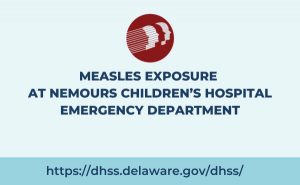 DPH Reports Measles Exposure at Nemours Children’s Hospital Emergency Department in Wilmington
 Statement from AG Jennings and Gov. Meyer on victory over Trump tariffs at SCOTUS
 Governor Meyer, DSHA, Apennine celebrate start of new housing in Georgetown
 Delaware Holds Career Fair to Expand Youth Pathways and State Employment Opportunities
 Spring Pond Trout Season to Open With Youth-Only Day March 7, Followed by Regular Downstate Opener March 8
 Charter School Accountability Committee recommends revocation of BASSE’s charter
 Join DOC’s Spring 2026 Citizens Academy for an insider’s look at Delaware’s correctional system
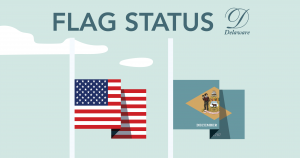 Governor Meyer Orders the Lowering of Flags to Honor the Lives of George Bunting and John Viola; Rev. Jesse Jackson
 Governor Matt Meyer Presents Order of the First State to Five Delawareans
 DPA Calls for Extension of PJM Capacity Price Cap to Protect Consumers
 Delaware School Safety Center Hosts School Security Officer Training for Delaware School Constables
 LEADelaware welcomes 11 new members for Class VIII, celebrates Class VII graduation
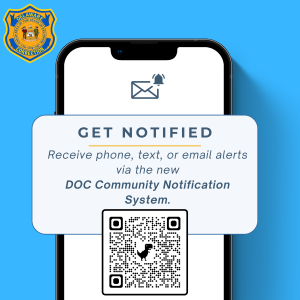 Department of Correction launches enhanced community notification system
 Delaware Announces Second Annual “Futures in the Arts” Celebration Announced
 Delaware Behavioral Health Consortium to Create a Comprehensive State of the State of Perinatal Health Report
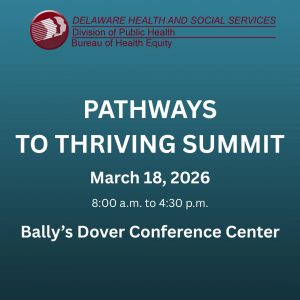 DPH to Host Summit on Building Healthy, Strong Communities in Delaware
 Delaware Department of Labor Marks Successful Paid Leave Launch in January
 Delaware Division of the Arts Announces 10 Finalists for Delaware’s 2026 Poetry Out Loud State Finals
 Delaware Organ and Tissue Donor Awareness Board Announces 2026 Video Scholarship Contest for High School Students
 DNREC Reopens Indian River Bay to Clamming and Shellfish Harvesting After Millsboro Sewage Release Delaware schools recognized for strong performance and progress in closing achievement gaps
 DOC Announces leadership promotions at Bureau of Community Corrections and Baylor Women’s Correctional Institution
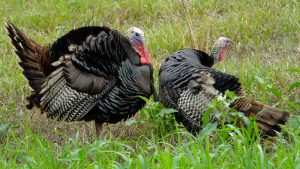 Spring Turkey Season Lottery Attracts Record Number of Applicants for Hunting State Wildlife Areas AG Jennings secures $17.85 million settlement with Lannett and Bausch over conspiracies to inflate prices
 State Employees’ Charitable Campaign Seeks Delaware Nonprofits for 2026 Giving Campaign
 DNREC Expands Paid Summer Internship Program for College Students and Recent Graduates Governor Meyer Announces Historic Investments in Early Education, Tags Lt. Governor Gay to Lead Systemic Change
  Governor Meyer Opens Nominations for The 2026 Delaware Women’s Hall of Fame & She’s on Her Way Awards
 Governor Matt Meyer Signs Executive Order Certifying Updated Delaware Land Use Strategies Delaware Department of Labor Publishes New Economic Articles Highlighting Delaware’s GDP and Future Workforce Trends
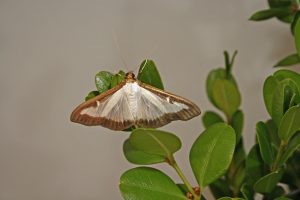 Attention Nursery Owners and Gardeners: Boxwood Workshop set for Wednesday, Feb. 4 Governor Matt Meyer Unveils FY 27 Recommended Budget Focused on Delaware-First, Affordability, and Responsible Growth
 First Saturday Program Explores Black Family History at the Delaware Public Archives AG Jennings secures additional $25 million natural resource damage settlement payment Governor Meyer’s Office Launches Applications for Spring Internship Program
 Kent County State Offices Open at 10 a.m. on January 27, 2026; New Castle and Sussex Operate on a Regular Schedule Governor Matt Meyer Announces Closure of All State Offices for Monday, January 26
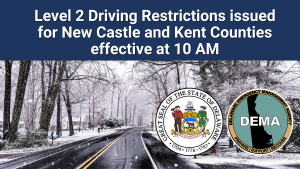 Level 2 Driving Restriction For New Castle & Kent Counties Effective 10 Am – Level 1 Remains In Sussex
 State of Emergency Declared – DEMA Emergency Operations Center Activated For Winter Storm Response
 2025 Annual Report showcases $8.1M investment in Downtown Development District Rebate Program AG Jennings, colleagues demand action from xAI over Grok’s Creation of Nonconsensual Sexual Content
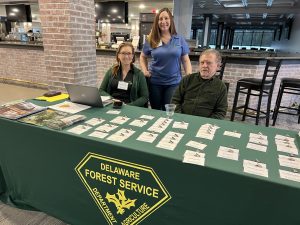 Delaware Forest Service Announces 11th Annual Arborist and Tree Care Seminar at Winterthur Museum, Garden & Library Governor Matt Meyer Lays Out Delaware-First Agenda in State of the State Address
 Delaware Division of the Arts Announces 2026 Individual Artist Fellowship Awardees Attorney General Jennings sues HHS for discriminating against transgender Delawareans
 Visit Delaware & DRA Host Premiere Event For “Back of House” Film Series
 Public Housing Authorities urge individuals to update waiting list applications
 Delaware Public Archives Explores Civilian Conservation Corps Legacy in New Digital Exhibit Governor Matt Meyer Issues Statement on Retirement of Senate President Pro Tempore Dave Sokola Appeals court blocks Trump Administration from defunding medical and public health research Governor Matt Meyer Nominates Jon Sheehan for Delaware State Board of Education President AG Jennings Opposes Trump Administration’s Proposals Aimed at Further Restricting Access to Gender-Affirming Care
 Delaware to Solicit Water Quality Improvement Projects With Infrastructure Investment and Jobs Act Funding
 Secretary Clifton announces Jimmy Kroon’s appointment as Deputy Secretary Delaware announces presumptive positive avian influenza case in Kent County commercial flock
Delaware Health and Social Services | Division of Public Health | Date Posted: Friday, February 20, 2026
DOVER, Del. (Feb.20, 2026) – The Delaware Division of Public Health (DPH) is reporting a measles exposure at the Nemours Children’s Hospital emergency department in Wilmington on February 18, 2026. Contact tracing is ongoing. DPH will notify persons who were identified as exposed, to confirm whether or not they have been vaccinated against measles before, provide educational resources, and to recommend quarantine and exclusion orders when necessary. DPH encourages people who were exposed to check their vaccination status and watch for symptoms for 21 days until March 11, 2026. Pregnant people — regardless of vaccination status — who may have been exposed during this time period should go to an emergency room for assessment and treatment.
Any individual who was exposed to measles, and is not fully vaccinated against measles, should get a dose of Measles, Mumps, Rubella (MMR) vaccine within 72 hours of exposure to someone with measles (by February 21, 2026). Vaccines may be available at facilities like pharmacies and primary care providers. Call your preferred facility to assure they have the MMR vaccine and are available to administer it.
If you are showing symptoms, contact the Office of Infectious Disease Epidemiology during regular business hours (302-744-4990) or the state’s 24-hour reporting line at 1-888-295-5156 outside of normal business hours to coordinate testing, receive guidance, and limit any further exposures. Those who are ill should seek immediate health care by contacting their primary care provider. If symptoms are severe, they should seek immediate care at the nearest emergency department. Prior to going to any health care facility, the individual should notify providers and medical transport that they or their child were exposed to measles. Health care providers who identify any potential measles case should contact the Office of Infectious Disease Epidemiology immediately.
If a Delaware resident is unsure of their vaccination status, they can visit the DelVAX Public Portal and view their personal profile. Individuals may also contact their primary health care provider for additional details or if they are unable to obtain their records on DelVAX.
The MMR vaccine is proven safe and effective at preventing measles having been administered for over five decades. Testing shows the vaccine to be 97% effective at preventing measles for those who have received two doses of the MMR vaccine and are not severely immunocompromised. Children should get their first dose of vaccine between 12 and 15 months of age and their second dose between 4 and 6 years of age. If you have not received both doses by age 6, you should get your first or second dose as soon as possible. Infants 6 to 11 months who are traveling internationally or who are in an area experiencing a measles outbreak or exposure should receive one early dose of MMR vaccine. Vaccinations are available to both adults and children at many pharmacies, federally qualified health centers (FQHCs), and providers throughout Delaware and also at public health clinics for the uninsured or underinsured. Individuals should contact their preferred facility in advance to confirm supply and availability.
Generally, you are considered protected (immune) if you were:
• Born before 1957, or
• Given a laboratory test that confirmed that you had measles at some point in your life, or
• Given a laboratory test that confirmed you are immune to measles, or
• Have received two doses of measles-containing vaccine (usually given as measles, mumps, rubella (MMR) vaccine).
O Look at your vaccination records or ask your health care provider to see if you have already had two doses of this vaccine.
O If you have only received one dose of measles-containing vaccine, your risk of measles following this exposure is low, but not zero. The second dose of vaccine is needed for maximum protection.
Measles is a highly contagious, acute viral illness that begins with early symptoms of fever, cough, coryza (runny nose) and conjunctivitis (pink eye), lasting two to four days prior to rash onset. The rash typically occurs three to five days after symptoms begin and usually appears on the face and spreads down the body. Measles can cause severe health complications, including pneumonia, brain inflammation and death. The virus is transmitted by direct contact with infectious droplets or by airborne spread when an infected person breathes, coughs or sneezes. The measles virus can remain infectious in the air and on surfaces for up to two hours after an infected person leaves an area. Infected people are contagious from four days before the rash starts through four days after rash development. The incubation period for measles from exposure to fever is usually about 10 days (range, seven to 12 days), and from exposure to rash onset is usually about 14 days (range, seven to 21 days).
For more information on measles, visit “Frequently Asked Questions” on the DPH website, https://dhss.delaware.gov/dph/files/measlesfaq.pdf.

Keep up to date by receiving a daily digest email, around noon, of current news release posts from state agencies on news.delaware.gov.
Here you can subscribe to future news updates.
Delaware Health and Social Services | Division of Public Health | Date Posted: Friday, February 20, 2026
DOVER, Del. (Feb.20, 2026) – The Delaware Division of Public Health (DPH) is reporting a measles exposure at the Nemours Children’s Hospital emergency department in Wilmington on February 18, 2026. Contact tracing is ongoing. DPH will notify persons who were identified as exposed, to confirm whether or not they have been vaccinated against measles before, provide educational resources, and to recommend quarantine and exclusion orders when necessary. DPH encourages people who were exposed to check their vaccination status and watch for symptoms for 21 days until March 11, 2026. Pregnant people — regardless of vaccination status — who may have been exposed during this time period should go to an emergency room for assessment and treatment.
Any individual who was exposed to measles, and is not fully vaccinated against measles, should get a dose of Measles, Mumps, Rubella (MMR) vaccine within 72 hours of exposure to someone with measles (by February 21, 2026). Vaccines may be available at facilities like pharmacies and primary care providers. Call your preferred facility to assure they have the MMR vaccine and are available to administer it.
If you are showing symptoms, contact the Office of Infectious Disease Epidemiology during regular business hours (302-744-4990) or the state’s 24-hour reporting line at 1-888-295-5156 outside of normal business hours to coordinate testing, receive guidance, and limit any further exposures. Those who are ill should seek immediate health care by contacting their primary care provider. If symptoms are severe, they should seek immediate care at the nearest emergency department. Prior to going to any health care facility, the individual should notify providers and medical transport that they or their child were exposed to measles. Health care providers who identify any potential measles case should contact the Office of Infectious Disease Epidemiology immediately.
If a Delaware resident is unsure of their vaccination status, they can visit the DelVAX Public Portal and view their personal profile. Individuals may also contact their primary health care provider for additional details or if they are unable to obtain their records on DelVAX.
The MMR vaccine is proven safe and effective at preventing measles having been administered for over five decades. Testing shows the vaccine to be 97% effective at preventing measles for those who have received two doses of the MMR vaccine and are not severely immunocompromised. Children should get their first dose of vaccine between 12 and 15 months of age and their second dose between 4 and 6 years of age. If you have not received both doses by age 6, you should get your first or second dose as soon as possible. Infants 6 to 11 months who are traveling internationally or who are in an area experiencing a measles outbreak or exposure should receive one early dose of MMR vaccine. Vaccinations are available to both adults and children at many pharmacies, federally qualified health centers (FQHCs), and providers throughout Delaware and also at public health clinics for the uninsured or underinsured. Individuals should contact their preferred facility in advance to confirm supply and availability.
Generally, you are considered protected (immune) if you were:
• Born before 1957, or
• Given a laboratory test that confirmed that you had measles at some point in your life, or
• Given a laboratory test that confirmed you are immune to measles, or
• Have received two doses of measles-containing vaccine (usually given as measles, mumps, rubella (MMR) vaccine).
O Look at your vaccination records or ask your health care provider to see if you have already had two doses of this vaccine.
O If you have only received one dose of measles-containing vaccine, your risk of measles following this exposure is low, but not zero. The second dose of vaccine is needed for maximum protection.
Measles is a highly contagious, acute viral illness that begins with early symptoms of fever, cough, coryza (runny nose) and conjunctivitis (pink eye), lasting two to four days prior to rash onset. The rash typically occurs three to five days after symptoms begin and usually appears on the face and spreads down the body. Measles can cause severe health complications, including pneumonia, brain inflammation and death. The virus is transmitted by direct contact with infectious droplets or by airborne spread when an infected person breathes, coughs or sneezes. The measles virus can remain infectious in the air and on surfaces for up to two hours after an infected person leaves an area. Infected people are contagious from four days before the rash starts through four days after rash development. The incubation period for measles from exposure to fever is usually about 10 days (range, seven to 12 days), and from exposure to rash onset is usually about 14 days (range, seven to 21 days).
For more information on measles, visit “Frequently Asked Questions” on the DPH website, https://dhss.delaware.gov/dph/files/measlesfaq.pdf.
Keep up to date by receiving a daily digest email, around noon, of current news release posts from state agencies on news.delaware.gov.
Here you can subscribe to future news updates.
Delaware's Governor
State Agencies
Elected Officials
General Assembly
Delaware Courts
State Employees
Cities & Towns
Delaware State Code
State Regulations
Business First Steps
Phone Directory
Locations Directory
Public Meetings
Voting & Elections
Transparency
Delaware Marketplace
Tax Center
Personal Income Tax
Privacy Policy
Weather & Travel
Contact Us
Corporations
Franchise Tax
Gross Receipts Tax
Withholding Tax
Delaware Topics
Help Center
Mobile Apps
E-mail / Text Alerts
Social Media


Built by the Government Information Center
©MMXXVI Delaware.gov
