Delaware News


With Waterfowl Seasons Reopening After Recent Virus Detection, DNREC Urges Safe Handling of Harvested Wild Birds

Department of Natural Resources and Environmental Control | Division of Fish and Wildlife | Newsroom | Date Posted: Tuesday, December 16, 2025


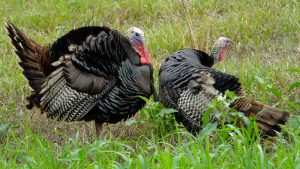
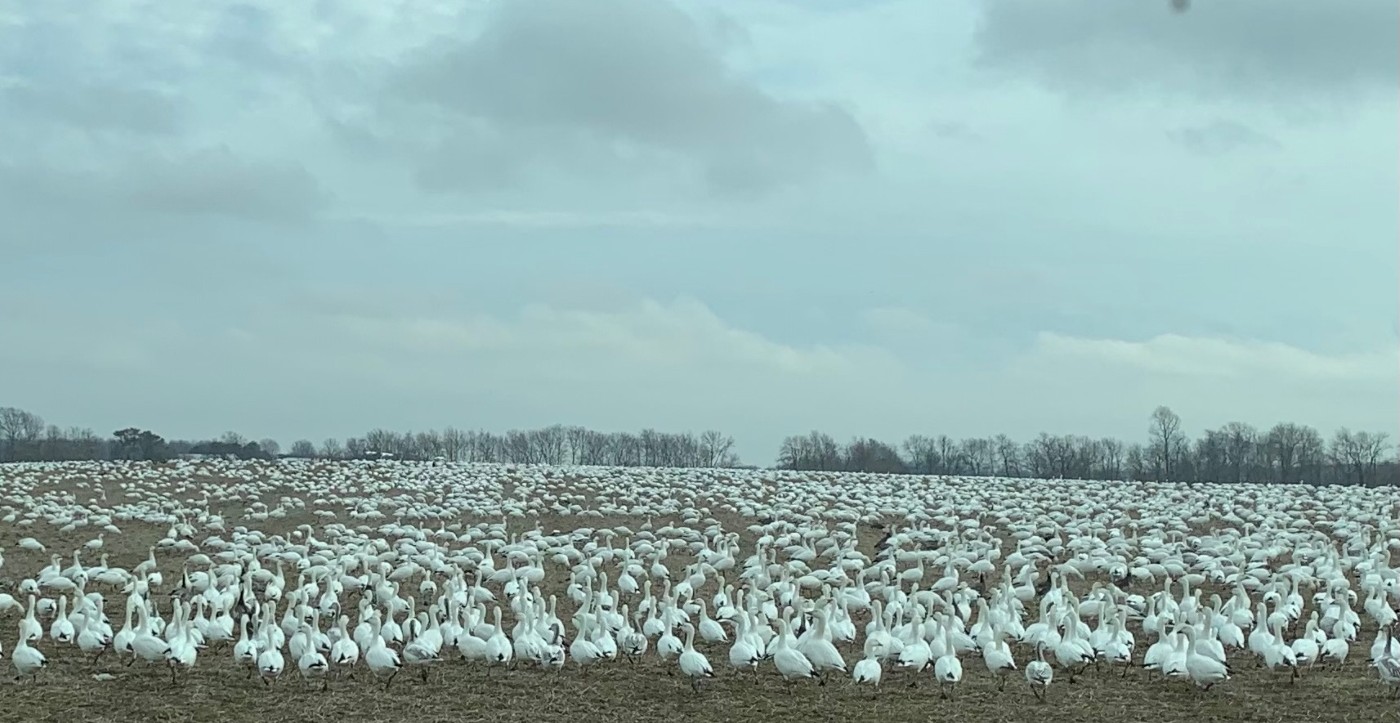
The annual snow goose migration to Delaware brings thousands of birds in large flocks spread over the state landscape. /Delaware DNREC photo

The annual snow goose migration brings tens of thousands of birds spread throughout Delaware’s landscape. /Delaware DNREC photo


Hunters and Wildlife Watchers Encountering Dead or Sick Wild Birds,
Especially Snow Geese, are Advised to Report Location to DNREC

With the reopening this week of Delaware’s waterfowl hunting season, the Department of Natural Resources and Environmental Control reminds hunters that safe handling of wild birds is imperative following the recent detection of highly pathogenic avian influenza (HPAI) in a sick snow goose found Dec. 8 in eastern Kent County. After returning presumptive positive for H5 avian influenza from the University of Delaware’s Allen Laboratory, the goose was sent for further testing at the U.S. Department of Agriculture’s National Veterinary Services Laboratory, returning a result of H5N1 highly pathogenic avian influenza on Dec. 15.

The third and final segment of duck season opens Wednesday, Dec. 17, followed three days later by the migratory Canada goose season – and hunters are asked not only to handle waterfowl safely after harvesting them, but to fill out DNREC’s sick and injured wildlife reporting form for any affected waterfowl or other wild birds they might come across while hunting. This would include sightings of any wild birds showing uncoordinated movement and an inability to fly, which indicates they are likely in the throes of HPAI.

Avian influenza is a highly contagious airborne respiratory virus that spreads quickly among birds through nasal and eye secretions and manure. Due to close contact with thousands of other snow geese while feeding and roosting, they can get sick and die. Snow geese, which are waterfowl, migrate from the Arctic and form large flocks in Delaware each winter. It is unknown when or where these geese may have acquired the virus given their highly migratory nature and their association with other waterfowl and waterbirds throughout the Atlantic Flyway through which they travel into Delaware and more southern states.

Precautions for Waterfowl Hunters
Delaware waterfowl hunters can reduce the risk of exposing poultry or pet birds to avian influenza by taking basic safety precautions to keep the disease from spreading.

  • Dress game birds in the field whenever possible. If you must dress game birds at home, do so in areas inaccessible to poultry and pet birds. Ideally, there should be a solid barrier between the areas where game is cleaned and where domestic birds are housed.
  • Keep a separate pair of shoes to wear only in your game-cleaning area. If this is not possible, wear rubber boots or shoes and clean and disinfect them before entering or leaving the area.
  • Use dedicated utensils for cleaning game, whether in the field or at home. Do not use these tools around poultry or domestic fowl.
  • Always wear rubber gloves when cleaning game.
  • Double bag the carcass remains and feathers. Tie the inner bag and be sure to take off your disposable rubber gloves and leave them in the outer bag before tying it closed.
  • Place the bag in a trash can that poultry, domestic fowl, children, pets, and other wildlife cannot access.
  • Wash hands with soap and water immediately after handling game.
  • Scrub all tools and work surfaces with soap and water.

DNREC and the U.S. Department of Agriculture’s Animal and Plant Health Inspection Service (APHIS) Wildlife Services will collaborate as needed to collect sick and deceased snow geese and other wild birds should HPAI spread throughout the state as it did in late 2024 through the earliest months of this year. The expanded statewide collection effort to help track HPAI is funded through DNREC and the Delaware Department of Agriculture (DDA).

Reporting deceased or ill wildlife does not guarantee that DNREC or APHIS Wildlife Services will respond to every report, only that a DNREC or APHIS Wildlife Services representative will assess the report, and if additional information is needed, may make follow-up contact.

The public should not pick up or handle any sick birds. Dead birds should not be picked up by the public unless disposable plastic gloves are worn to handle them – this guidance also applies to waterfowl hunters, who are advised to follow more focused protocols found on the APHIS website for handling and field dressing any ducks or geese they harvested in Delaware.

If a Delaware resident finds a dead wild bird on their property and wants to remove it themselves, they should wear proper personal protective equipment (PPE), including gloves, a mask, and safety glasses, to dispose of it. Double-bag each dead bird found, zip-tie the bag and put it in the trash bin for pickup and disposal at a Delaware Solid Waste Authority landfill. Residents are also advised to carefully remove and dispose of all PPE in the dedicated trash bags and always wash their hands afterward.

While the H5N1 virus has infected a small number of people across the United States, there is no documented transmission of the virus between people in this country. Although continued testing of people in close contact with animals infected with HPAI indicates a low risk to the general public’s health, children and pets should be kept away from wild birds and bird droppings.

If anyone in contact with wild birds or poultry begins to experience flu-like symptoms, they should contact the Delaware Division of Public Health Office of Infectious Disease Epidemiology at 888-295-5156 (after hours) or 302-744-4990 (business hours) for a referral to a DPH clinic to obtain a flu swab test. Flu-like symptoms include fever, cough, sore throat, congestion, body aches, fatigue, and sometimes diarrhea. If symptoms seem severe, including trouble breathing, chest pain or pressure, dizziness/confusion, severe muscle pain, seizure, severe weakness or unsteadiness, worsening of chronic medical conditions, or fever or cough that begin to improve and then worsen or return, please dial 911 or visit the emergency department. Let hospital staff and providers know if you have been exposed to poultry or wild birds.

For more information about avian influenza impacting wildlife, visit the DNREC website. For more information on HPAI and the State’s poultry industry, visit de.gov/poultry.

About DNREC
The Delaware Department of Natural Resources and Environmental Control protects and manages the state’s natural resources, protects public health, provides outdoor recreational opportunities, and educates Delawareans about the environment. The DNREC Division of Fish and Wildlife conserves and manages Delaware’s fish and wildlife and their habitats, and provides fishing, hunting, wildlife viewing and boating access on more than 68,000 acres of public land. For more information, visit the website and connect with @DelawareDNREC on YouTube, Facebook, Instagram, X, or LinkedIn.

Media contacts: Michael Globetti, michael.globetti@delaware.gov; Nikki Lavoie, nikki.lavoie@delaware.gov

###


image_printPrint

Graphic that represents delaware news on a mobile phone

Keep up to date by receiving a daily digest email, around noon, of current news release posts from state agencies on news.delaware.gov.

Here you can subscribe to future news updates.

With Waterfowl Seasons Reopening After Recent Virus Detection, DNREC Urges Safe Handling of Harvested Wild Birds

Department of Natural Resources and Environmental Control | Division of Fish and Wildlife | Newsroom | Date Posted: Tuesday, December 16, 2025


The annual snow goose migration to Delaware brings thousands of birds in large flocks spread over the state landscape. /Delaware DNREC photo

The annual snow goose migration brings tens of thousands of birds spread throughout Delaware’s landscape. /Delaware DNREC photo


Hunters and Wildlife Watchers Encountering Dead or Sick Wild Birds,
Especially Snow Geese, are Advised to Report Location to DNREC

With the reopening this week of Delaware’s waterfowl hunting season, the Department of Natural Resources and Environmental Control reminds hunters that safe handling of wild birds is imperative following the recent detection of highly pathogenic avian influenza (HPAI) in a sick snow goose found Dec. 8 in eastern Kent County. After returning presumptive positive for H5 avian influenza from the University of Delaware’s Allen Laboratory, the goose was sent for further testing at the U.S. Department of Agriculture’s National Veterinary Services Laboratory, returning a result of H5N1 highly pathogenic avian influenza on Dec. 15.

The third and final segment of duck season opens Wednesday, Dec. 17, followed three days later by the migratory Canada goose season – and hunters are asked not only to handle waterfowl safely after harvesting them, but to fill out DNREC’s sick and injured wildlife reporting form for any affected waterfowl or other wild birds they might come across while hunting. This would include sightings of any wild birds showing uncoordinated movement and an inability to fly, which indicates they are likely in the throes of HPAI.

Avian influenza is a highly contagious airborne respiratory virus that spreads quickly among birds through nasal and eye secretions and manure. Due to close contact with thousands of other snow geese while feeding and roosting, they can get sick and die. Snow geese, which are waterfowl, migrate from the Arctic and form large flocks in Delaware each winter. It is unknown when or where these geese may have acquired the virus given their highly migratory nature and their association with other waterfowl and waterbirds throughout the Atlantic Flyway through which they travel into Delaware and more southern states.

Precautions for Waterfowl Hunters
Delaware waterfowl hunters can reduce the risk of exposing poultry or pet birds to avian influenza by taking basic safety precautions to keep the disease from spreading.

  • Dress game birds in the field whenever possible. If you must dress game birds at home, do so in areas inaccessible to poultry and pet birds. Ideally, there should be a solid barrier between the areas where game is cleaned and where domestic birds are housed.
  • Keep a separate pair of shoes to wear only in your game-cleaning area. If this is not possible, wear rubber boots or shoes and clean and disinfect them before entering or leaving the area.
  • Use dedicated utensils for cleaning game, whether in the field or at home. Do not use these tools around poultry or domestic fowl.
  • Always wear rubber gloves when cleaning game.
  • Double bag the carcass remains and feathers. Tie the inner bag and be sure to take off your disposable rubber gloves and leave them in the outer bag before tying it closed.
  • Place the bag in a trash can that poultry, domestic fowl, children, pets, and other wildlife cannot access.
  • Wash hands with soap and water immediately after handling game.
  • Scrub all tools and work surfaces with soap and water.

DNREC and the U.S. Department of Agriculture’s Animal and Plant Health Inspection Service (APHIS) Wildlife Services will collaborate as needed to collect sick and deceased snow geese and other wild birds should HPAI spread throughout the state as it did in late 2024 through the earliest months of this year. The expanded statewide collection effort to help track HPAI is funded through DNREC and the Delaware Department of Agriculture (DDA).

Reporting deceased or ill wildlife does not guarantee that DNREC or APHIS Wildlife Services will respond to every report, only that a DNREC or APHIS Wildlife Services representative will assess the report, and if additional information is needed, may make follow-up contact.

The public should not pick up or handle any sick birds. Dead birds should not be picked up by the public unless disposable plastic gloves are worn to handle them – this guidance also applies to waterfowl hunters, who are advised to follow more focused protocols found on the APHIS website for handling and field dressing any ducks or geese they harvested in Delaware.

If a Delaware resident finds a dead wild bird on their property and wants to remove it themselves, they should wear proper personal protective equipment (PPE), including gloves, a mask, and safety glasses, to dispose of it. Double-bag each dead bird found, zip-tie the bag and put it in the trash bin for pickup and disposal at a Delaware Solid Waste Authority landfill. Residents are also advised to carefully remove and dispose of all PPE in the dedicated trash bags and always wash their hands afterward.

While the H5N1 virus has infected a small number of people across the United States, there is no documented transmission of the virus between people in this country. Although continued testing of people in close contact with animals infected with HPAI indicates a low risk to the general public’s health, children and pets should be kept away from wild birds and bird droppings.

If anyone in contact with wild birds or poultry begins to experience flu-like symptoms, they should contact the Delaware Division of Public Health Office of Infectious Disease Epidemiology at 888-295-5156 (after hours) or 302-744-4990 (business hours) for a referral to a DPH clinic to obtain a flu swab test. Flu-like symptoms include fever, cough, sore throat, congestion, body aches, fatigue, and sometimes diarrhea. If symptoms seem severe, including trouble breathing, chest pain or pressure, dizziness/confusion, severe muscle pain, seizure, severe weakness or unsteadiness, worsening of chronic medical conditions, or fever or cough that begin to improve and then worsen or return, please dial 911 or visit the emergency department. Let hospital staff and providers know if you have been exposed to poultry or wild birds.

For more information about avian influenza impacting wildlife, visit the DNREC website. For more information on HPAI and the State’s poultry industry, visit de.gov/poultry.

About DNREC
The Delaware Department of Natural Resources and Environmental Control protects and manages the state’s natural resources, protects public health, provides outdoor recreational opportunities, and educates Delawareans about the environment. The DNREC Division of Fish and Wildlife conserves and manages Delaware’s fish and wildlife and their habitats, and provides fishing, hunting, wildlife viewing and boating access on more than 68,000 acres of public land. For more information, visit the website and connect with @DelawareDNREC on YouTube, Facebook, Instagram, X, or LinkedIn.

Media contacts: Michael Globetti, michael.globetti@delaware.gov; Nikki Lavoie, nikki.lavoie@delaware.gov

###


image_printPrint

Graphic that represents delaware news on a mobile phone

Keep up to date by receiving a daily digest email, around noon, of current news release posts from state agencies on news.delaware.gov.

Here you can subscribe to future news updates.