




















Delaware’s 2025 Wildlife Action Plan Gets U.S. Fish and Wildlife Service Approval
Department of Natural Resources and Environmental Control | Division of Fish and Wildlife | Newsroom | Date Posted: Wednesday, April 8, 2026

 Governor Meyer, DSPC, and Enstructure Announce Permit Issuance for Delaware Container Terminal
 Delaware’s 2025 Wildlife Action Plan Gets U.S. Fish and Wildlife Service Approval
 DNREC to Conduct Statewide Assessment of Wastewater Infrastructure in Manufactured Home Communities
 Upcoming Electricity Rate Increase Adds to Cost Increases for Delmarva Customers
 Slow Down and Stay Focused: OHS Kicks Off Spring BRAKE and Distracted Driving Awareness Month
 AG Jennings wins appeals court ruling against HUD’s attempts to restrict housing-assistance programs
  Volunteers Sought to Join DNREC in Cleaning Up Concord Pond near Seaford for Earth Month
 Historical and Cultural Affairs Presents Arts & Education Programs for the Month of April Division of Historical and Cultural Affairs Announces Deputy Director and PIO Appointments
 Delaware Releases Strategic Framework for Contaminants of Emerging Concern and First PFAS Implementation Plan
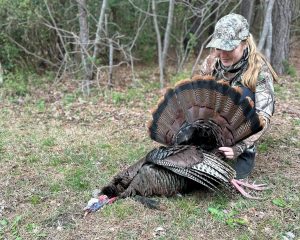 Turkey Hunting Season to Offer an Extra Day; Season Opens April 4 and 5 with Youth and Non-ambulatory Hunts
 Delaware Veterans Connect, Create, and Showcase Their Work Through Free Statewide Art Classes
 Court rules with State, clears way for offshore wind substation critical to Delaware’s energy future
 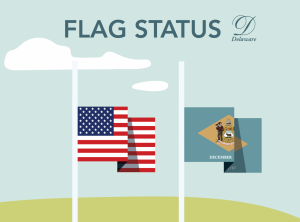 Governor Meyer Orders Lowering of Flags to Honor Former State Senator Nancy Cook DOJ announces arrest of Delmar officer in stalking, sexual contact investigations
 Delaware Division of the Arts Announces 15th Annual State Employee Art Exhibition Winners DOJ secures life sentences, additional time for two men involved in the murder of Shiheem Durham
 Lt. Governor Kyle Evans Gay Sits Down with Small Business Leaders Across the State
 Results of OHS’ St. Patrick’s Day Weekend DUI Checkpoint and Sober Rides Program
 Delaware Senators Move One Step Closer to Protecting Civil Rights for Individuals with Disabilities
 Public Advocate Names New Deputy and Key Staff to Strengthen Consumer Advocacy
 Bring Your Family History to Life at the Archives’ Community Digitization Days
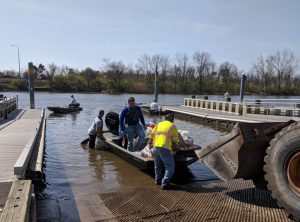 Registration Now Open for DNREC-Sponsored Christina River Watershed Cleanup
 Delaware accelerates statewide early literacy strategy with more than $8m to strengthen classroom reading instruction
 Upstate Trout Season to Open in New Castle County Streams with Youth-Only Day Set for April 4
 Delaware Division of the Arts Seeks Public Input in New Statewide Strategic Planning Process
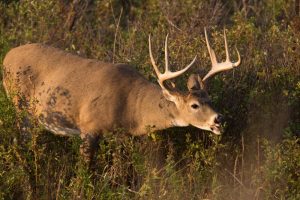 DNREC Announces 2025-‘26 Deer Harvest Totals, Launches New Interactive Game Harvest Dashboard
 Property Reassessment & Your Insurance: What Really Drives Premium Costs
 Amid Hints of Spring, DNREC Reminds Delawareans of Yard Waste Options, Including Beneficial Reuse Governor Matt Meyer Returns from India Trade Mission with New Investment and Innovation Opportunities
 DNREC Now Soliciting Community Water Quality Improvement Grant Project Proposals
 Delaware Officials Highlight DTRN360, Innovative Behavioral Health Care Coordination Platform AG Jennings sues Trump Administration to stop latest round of illegal tariffs Delaware Policy Leaders Take Aim at Primary Care Reform, Health Care Affordability
 Women and Tavern Keeping on the Dover Green at the Archives’ March First Saturday Program
 Delaware Governor Matt Meyer Proclaims March 9-13, 2026 Severe Weather Awareness Week
 DNREC to Resume Sand Bypass Operations At Indian River Inlet After Signing Contract With First State Crane Service
 Attention Ag Insurance Agents: Subsidy issues subject of Monday, March 9 virtual Q&A with USDA Risk Management Agency AG Jennings intervenes in USPS case that would allow guns to be mailed with virtually no limits
 Delaware Department of Education sets measurable targets to accelerate student achievement statewide AG Jennings blocks another Trump Admin attempt to defund SNAP, collect personal data
 Delaware Entradas a las fiestas para ver los partidos de la Copa Mundial de la FIFA 2026 saldrán
 Delaware Lt. Gov Gay, Education Secretary Marten celebrate 302 Day with fourth graders Governor Matt Meyer Issues Statement on the Unanimous Upholding of Senate Bill 21 by the Delaware Supreme Court
 DSHA announces participants in zoning and land use reform pilot program Governor Matt Meyer Signs Executive Order Streamlining State Permitting Regulations
 DNREC Closes The Point at Cape Henlopen March 1 to Protect Nesting, Migrating Birds
 DHSS, DNREC Reopen PFAS Awareness and Outreach Grant Opportunity Through March 27
Department of Natural Resources and Environmental Control | Division of Fish and Wildlife | Newsroom | Date Posted: Wednesday, April 8, 2026
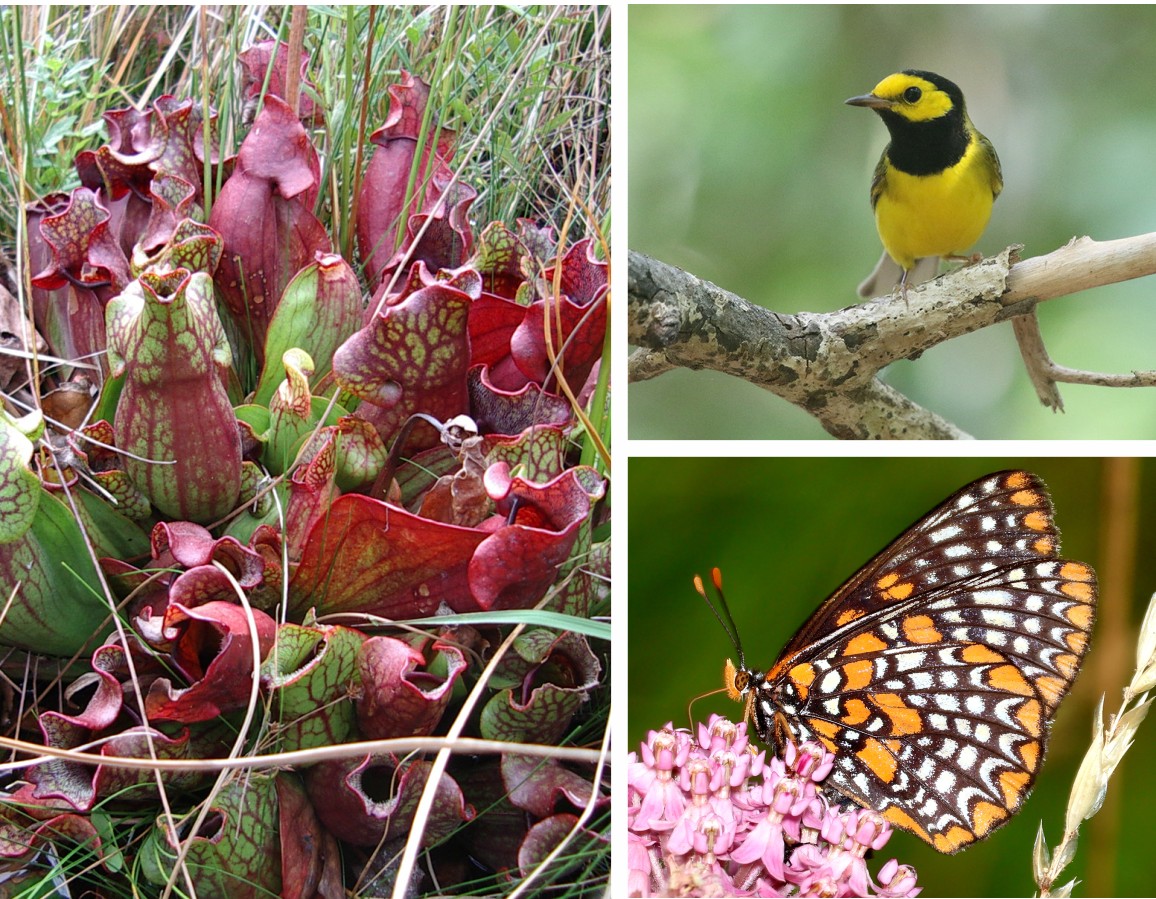
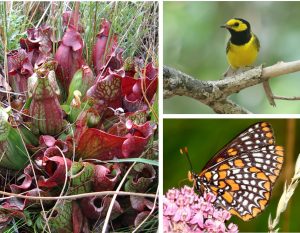
Three Delaware species ranked as Tier 1 Species of Greatest Conservation Need in the 2025 Delaware Wildlife Action Plan clockwise from left:
Purple Pitcher Plant, Hooded Warbler and Baltimore Checkerspot Butterfly. /Delaware DNREC and US Fish and Wildlife Service photos
Plan Becomes State’s Conservation Blueprint for Wildlife Diversity and Enables Federal
Funding from USFWS’s State Wildlife Grant Program for the Next Decade – Through 2035
The Department of Natural Resources and Environmental Control announced today that the U.S. Fish and Wildlife Service (USFWS) has given formal approval to Delaware’s 2025 Wildlife Action Plan (DEWAP) after the DNREC Division of Fish and Wildlife submitted the plan last fall for federal review and revision. The USFWS officially notified DNREC this week that Delaware may begin using the 2025 DEWAP to guide conservation efforts for the state’s wildlife and their habitats through 2035.
Over the past three years, the Division of Fish and Wildlife and DNREC’s conservation partners have worked with wildlife experts, other key stakeholders and the public throughout the state and region gathering input to develop and revise the wildlife action plan. Required for Delaware to remain eligible for the USFWS’s State Wildlife Grant Program funding, the 2025 plan assesses Delaware’s species of greatest conservation need (SGCN) and their habitats, identifies the challenges they face, and outlines actions needed for conserving them.
“The 2025 wildlife action plan revision applies a balanced and comprehensive approach to wildlife conservation where we strive for the principle of keeping common species common and healthy ecosystems healthy at all levels, from small local communities to broader national and international efforts,” said Division of Fish and Wildlife Director Patrick Emory. “The plan exemplifies how we can adjust our approach and renew our commitment, in terms of human resources and funding, to the wildlife resources we are responsible for.”
At the heart of the 2025 revision is an effort to make the plan more accessible, by web-enabling its contents, providing public access to a searchable database, and displaying maps of important habitats. This revision makes the Delaware Wildlife Action Plan easy to reach for and use by DNREC’s conservation partners, planners, state and local agencies, and the public. The complete plan, database, and habitat explorer are available at the de.gov/dewap webpage.
Working with stakeholders, DNREC has identified and prioritized the fish, wildlife and associated habitats most in need of conservation. Each state determines its own SGCN list, based on criteria such as global and state rarity, endangered status at the state or federal level, and designation as a Northeast Regional Species of Greatest Conservation Need. (Delaware is classified as belonging to the USFWS’s Northeast Region.) Each species is further categorized into Tier 1, Tier 2, or Tier 3, with the tiers reflecting the urgency and level of conservation need.
A key 2025 DEWAP update to the SGCN list is the inclusion of 326 plants, bringing the total number of SGCN to 1,019 species. In addition to addressing the conservation needs of rare and uncommon species, the plan also identifies actions to keep common species common by recommending conservation efforts throughout Delaware that can be undertaken by public and private partners over the next decade.
As wildlife conservation moves forward in the 21st century, there is an overarching need for vigilance in recognizing changes in wildlife populations and habitats, in addressing both existing and emerging threats and issues facing the state’s wildlife resources and in developing the adaptive capacity to identify and implement a variety of management techniques to address conservation challenges through effective and measurable outcomes. Threats from climate change, including impacts from sea level rise, have come to the forefront of the issues faced by many wildlife populations and habitats. For Delaware, this plan identifies threats against and actions to be taken on behalf of the state’s species of greatest conservation need and their habitats – and takes a significant step forward in continuing to address the future of Delaware’s wildlife populations and habitats.
“This plan took all of the tremendous effort that went into the 2015 plan, builds on our conservation successes with it, and charts a path forward to guide fish and wildlife conservation in Delaware for the next decade,” said DNREC Wildlife Section Administrator Joe Rogerson. “Most importantly, scientists, hunters, anglers, conservationists and all other stakeholders will have an opportunity to work together to implement conservation actions and strive to address and mitigate threats that face Delaware’s valuable wildlife resources.”
As begun by the 2005 plan submission and continuing with the 2015 revision that succeeded it, the 2025 Delaware Wildlife Action Plan directs the Division of Fish and Wildlife to plan effectively for wildlife diversity now and prepare to adapt to future dynamic wildlife populations, habitats, threats and actions, rather than remain static and regret opportunities to act as stewards of Delaware’s natural heritage.
The strategies outlined and revised in the plan can culminate in a continued funding source for wildlife diversity and serve as a roadmap for future operational plans. In short, DEWAP enables an opportunity for DNREC to successfully meet a formidable challenge by collaborating with our conservation partners and colleagues at all levels of public and private participation to advance the cause of wildlife conservation and species preservation for Delaware’s future.
About DNREC
The Delaware Department of Natural Resources and Environmental Control protects and manages the state’s natural resources, protects public health, provides outdoor recreational opportunities, and educates Delawareans about the environment. The DNREC Division of Fish and Wildlife conserves and manages Delaware’s fish and wildlife and their habitats, and provides fishing, hunting, wildlife viewing and boating access on more than 75,000 acres of public land. For more information, visit the website and connect with @DelawareDNREC on YouTube, Facebook, Instagram, X or LinkedIn.
Media Contacts: Michael Globetti, michael.globetti@delaware.gov; Nikki Lavoie, nikki.lavoie@delaware.gov
###

Keep up to date by receiving a daily digest email, around noon, of current news release posts from state agencies on news.delaware.gov.
Here you can subscribe to future news updates.
Department of Natural Resources and Environmental Control | Division of Fish and Wildlife | Newsroom | Date Posted: Wednesday, April 8, 2026
Three Delaware species ranked as Tier 1 Species of Greatest Conservation Need in the 2025 Delaware Wildlife Action Plan clockwise from left:
Purple Pitcher Plant, Hooded Warbler and Baltimore Checkerspot Butterfly. /Delaware DNREC and US Fish and Wildlife Service photos
Plan Becomes State’s Conservation Blueprint for Wildlife Diversity and Enables Federal
Funding from USFWS’s State Wildlife Grant Program for the Next Decade – Through 2035
The Department of Natural Resources and Environmental Control announced today that the U.S. Fish and Wildlife Service (USFWS) has given formal approval to Delaware’s 2025 Wildlife Action Plan (DEWAP) after the DNREC Division of Fish and Wildlife submitted the plan last fall for federal review and revision. The USFWS officially notified DNREC this week that Delaware may begin using the 2025 DEWAP to guide conservation efforts for the state’s wildlife and their habitats through 2035.
Over the past three years, the Division of Fish and Wildlife and DNREC’s conservation partners have worked with wildlife experts, other key stakeholders and the public throughout the state and region gathering input to develop and revise the wildlife action plan. Required for Delaware to remain eligible for the USFWS’s State Wildlife Grant Program funding, the 2025 plan assesses Delaware’s species of greatest conservation need (SGCN) and their habitats, identifies the challenges they face, and outlines actions needed for conserving them.
“The 2025 wildlife action plan revision applies a balanced and comprehensive approach to wildlife conservation where we strive for the principle of keeping common species common and healthy ecosystems healthy at all levels, from small local communities to broader national and international efforts,” said Division of Fish and Wildlife Director Patrick Emory. “The plan exemplifies how we can adjust our approach and renew our commitment, in terms of human resources and funding, to the wildlife resources we are responsible for.”
At the heart of the 2025 revision is an effort to make the plan more accessible, by web-enabling its contents, providing public access to a searchable database, and displaying maps of important habitats. This revision makes the Delaware Wildlife Action Plan easy to reach for and use by DNREC’s conservation partners, planners, state and local agencies, and the public. The complete plan, database, and habitat explorer are available at the de.gov/dewap webpage.
Working with stakeholders, DNREC has identified and prioritized the fish, wildlife and associated habitats most in need of conservation. Each state determines its own SGCN list, based on criteria such as global and state rarity, endangered status at the state or federal level, and designation as a Northeast Regional Species of Greatest Conservation Need. (Delaware is classified as belonging to the USFWS’s Northeast Region.) Each species is further categorized into Tier 1, Tier 2, or Tier 3, with the tiers reflecting the urgency and level of conservation need.
A key 2025 DEWAP update to the SGCN list is the inclusion of 326 plants, bringing the total number of SGCN to 1,019 species. In addition to addressing the conservation needs of rare and uncommon species, the plan also identifies actions to keep common species common by recommending conservation efforts throughout Delaware that can be undertaken by public and private partners over the next decade.
As wildlife conservation moves forward in the 21st century, there is an overarching need for vigilance in recognizing changes in wildlife populations and habitats, in addressing both existing and emerging threats and issues facing the state’s wildlife resources and in developing the adaptive capacity to identify and implement a variety of management techniques to address conservation challenges through effective and measurable outcomes. Threats from climate change, including impacts from sea level rise, have come to the forefront of the issues faced by many wildlife populations and habitats. For Delaware, this plan identifies threats against and actions to be taken on behalf of the state’s species of greatest conservation need and their habitats – and takes a significant step forward in continuing to address the future of Delaware’s wildlife populations and habitats.
“This plan took all of the tremendous effort that went into the 2015 plan, builds on our conservation successes with it, and charts a path forward to guide fish and wildlife conservation in Delaware for the next decade,” said DNREC Wildlife Section Administrator Joe Rogerson. “Most importantly, scientists, hunters, anglers, conservationists and all other stakeholders will have an opportunity to work together to implement conservation actions and strive to address and mitigate threats that face Delaware’s valuable wildlife resources.”
As begun by the 2005 plan submission and continuing with the 2015 revision that succeeded it, the 2025 Delaware Wildlife Action Plan directs the Division of Fish and Wildlife to plan effectively for wildlife diversity now and prepare to adapt to future dynamic wildlife populations, habitats, threats and actions, rather than remain static and regret opportunities to act as stewards of Delaware’s natural heritage.
The strategies outlined and revised in the plan can culminate in a continued funding source for wildlife diversity and serve as a roadmap for future operational plans. In short, DEWAP enables an opportunity for DNREC to successfully meet a formidable challenge by collaborating with our conservation partners and colleagues at all levels of public and private participation to advance the cause of wildlife conservation and species preservation for Delaware’s future.
About DNREC
The Delaware Department of Natural Resources and Environmental Control protects and manages the state’s natural resources, protects public health, provides outdoor recreational opportunities, and educates Delawareans about the environment. The DNREC Division of Fish and Wildlife conserves and manages Delaware’s fish and wildlife and their habitats, and provides fishing, hunting, wildlife viewing and boating access on more than 75,000 acres of public land. For more information, visit the website and connect with @DelawareDNREC on YouTube, Facebook, Instagram, X or LinkedIn.
Media Contacts: Michael Globetti, michael.globetti@delaware.gov; Nikki Lavoie, nikki.lavoie@delaware.gov
###
Keep up to date by receiving a daily digest email, around noon, of current news release posts from state agencies on news.delaware.gov.
Here you can subscribe to future news updates.
Delaware's Governor
State Agencies
Elected Officials
General Assembly
Delaware Courts
State Employees
Cities & Towns
Delaware State Code
State Regulations
Business First Steps
Phone Directory
Locations Directory
Public Meetings
Voting & Elections
Transparency
Delaware Marketplace
Tax Center
Personal Income Tax
Privacy Policy
Weather & Travel
Contact Us
Corporations
Franchise Tax
Gross Receipts Tax
Withholding Tax
Delaware Topics
Help Center
Mobile Apps
E-mail / Text Alerts
Social Media


Built by the Government Information Center
©MMXXVI Delaware.gov
