
Delaware Trauma System of Care Recognized for 30 Years of Saving Lives
Newsroom | Date Posted: Wednesday, May 20, 2026


Newsroom | Date Posted: Wednesday, May 20, 2026
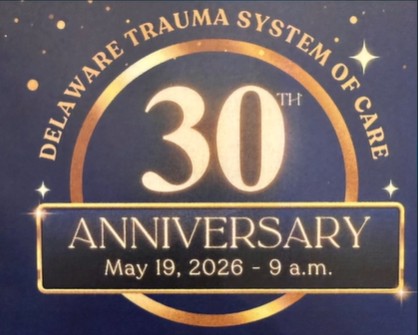
DOVER, Del. (May 20, 2026) – State leaders, trauma care professionals, emergency responders, and hospital partners gathered Tuesday at Legislative Hall to commemorate the 30th anniversary of the Delaware Trauma System of Care, recognizing three decades of coordinated, lifesaving trauma care across the state.
Established through legislation signed in 1996 by then-Gov. Thomas Carper, the Delaware Trauma System of Care was created to ensure seriously injured patients receive rapid, coordinated care from the moment a 9-1-1 call is placed through rehabilitation and recovery. Today, Delaware remains one of only a few states with a fully inclusive statewide trauma system in which every acute care hospital participates.
The Delaware Trauma System of Care unites 9-1-1 emergency communications centers; emergency medical services providers; fire, rescue, and police agencies; air medical transport teams; and hospital trauma professionals — including emergency departments, operating rooms, intensive care units, and rehabilitation services — into a coordinated statewide network designed to improve survival and reduce disability following serious injury.
“No matter where people are injured in Delaware, they enter a coordinated system of care designed to ensure trauma patients receive the most up-to-date treatment at the facility best equipped to manage their injuries,” said Division of Public Health (DPH) Director Steven Blessing during remarks at the anniversary event.
“The system of care approach is a tool to reduce incidence of injury, disease, and death, ultimately improving the overall health of our citizens,” Blessing said.
When other jurisdictions replicated Delaware’s trauma system, “That made Delaware a true leader in trauma system development,” Blessing said.
The program included remarks from state and trauma system leadership, recognition of founding contributors, presentations on system milestones and performance data, and reflections on the future of trauma care in Delaware.
“No single organization can do this alone and that has always been one of Delaware’s greatest strengths: our willingness to work together,” said Sean Elwell, chair of the Delaware Trauma System of Care. “Delaware has shown that when people are aligned around a mission, extraordinary things are possible. We have been able to innovate, coordinate, standardize, and improve in ways that others admire and seek to replicate.”
According to the Delaware Trauma Registry, the mortality rate for traumatically injured patients treated at Delaware trauma centers declined from 4.2% in 2000 to 2.8% in 2025 — a reduction of approximately 40%. Mortality among Delaware’s most severely injured patients also declined significantly, from 45.7% in 1998 to approximately 20.4% in 2025.
Trauma system leaders credited those improvements to statewide coordination and ongoing advancements in trauma care, including prehospital whole blood programs, expanded air medical capabilities, standardized trauma protocols, and physician-supported prehospital care programs.
The DPH Office of Emergency Medical Services (OEMS) serves as the lead agency overseeing the trauma system across the continuum of care — from the moment an injury occurs through recovery and rehabilitation. OEMS works with hospitals, emergency responders, and public safety partners statewide to maintain coordinated trauma response capabilities and system standards.
Hospitals that meet the standards established by the American College of Surgeons Committee on Trauma receive state designation as trauma centers. ChristianaCare’s Christiana Hospital serves as Delaware’s Adult Regional Level I Trauma Center, providing comprehensive care for all aspects of injury, from prevention through rehabilitation, while Nemours Children’s Health in Wilmington serves as the state’s Pediatric Regional Level I Trauma Center.
Delaware also has seven Community Level III Trauma Centers: Bayhealth Kent Campus, Bayhealth Sussex Campus, Beebe Healthcare, ChristianaCare Wilmington Hospital, Saint Francis Healthcare, TidalHealth Nanticoke, and TidalHealth Peninsula Regional in Salisbury, Maryland, through reciprocity agreements. These centers provide assessment, resuscitation, stabilization, and triage for trauma patients and arrange timely transfers when higher levels of care are needed.
Traumatic injuries can result from both unintentional and intentional events, including falls, motor vehicle crashes, burns, violence, shootings, stabbings, industrial incidents, and other emergencies. Unintentional injuries remain the leading cause of death and disability among people ages 1 to 44 in Delaware and nationwide. Falls, roadway incidents, and assault-related injuries account for more than 80% of injury-related hospitalizations in Delaware.
Officials said the anniversary event not only recognized the history of the trauma system, but also reaffirmed Delaware’s commitment to strengthening emergency and trauma care for future generations.
For more information about the Delaware Trauma System of Care, visit the DPH Office of Emergency Medical Services webpage at https://dhss.delaware.gov/dph/ems/trauma/ or call 302-223-1350. Information about the Delaware Coalition for Injury Prevention is available at https://dhss.delaware.gov/dph/ems/injuryprevention/.
A full video of the event is available at the DPH YouTube page at https://www.youtube.com/watch?v=anOB6k15Cxw. To subscribe to the DPH YouTube page, go to https://www.youtube.com/@depublichealth?sub_confirmation=1.

Keep up to date by receiving a daily digest email, around noon, of current news release posts from state agencies on news.delaware.gov.
Here you can subscribe to future news updates.
Newsroom | Date Posted: Wednesday, May 20, 2026
DOVER, Del. (May 20, 2026) – State leaders, trauma care professionals, emergency responders, and hospital partners gathered Tuesday at Legislative Hall to commemorate the 30th anniversary of the Delaware Trauma System of Care, recognizing three decades of coordinated, lifesaving trauma care across the state.
Established through legislation signed in 1996 by then-Gov. Thomas Carper, the Delaware Trauma System of Care was created to ensure seriously injured patients receive rapid, coordinated care from the moment a 9-1-1 call is placed through rehabilitation and recovery. Today, Delaware remains one of only a few states with a fully inclusive statewide trauma system in which every acute care hospital participates.
The Delaware Trauma System of Care unites 9-1-1 emergency communications centers; emergency medical services providers; fire, rescue, and police agencies; air medical transport teams; and hospital trauma professionals — including emergency departments, operating rooms, intensive care units, and rehabilitation services — into a coordinated statewide network designed to improve survival and reduce disability following serious injury.
“No matter where people are injured in Delaware, they enter a coordinated system of care designed to ensure trauma patients receive the most up-to-date treatment at the facility best equipped to manage their injuries,” said Division of Public Health (DPH) Director Steven Blessing during remarks at the anniversary event.
“The system of care approach is a tool to reduce incidence of injury, disease, and death, ultimately improving the overall health of our citizens,” Blessing said.
When other jurisdictions replicated Delaware’s trauma system, “That made Delaware a true leader in trauma system development,” Blessing said.
The program included remarks from state and trauma system leadership, recognition of founding contributors, presentations on system milestones and performance data, and reflections on the future of trauma care in Delaware.
“No single organization can do this alone and that has always been one of Delaware’s greatest strengths: our willingness to work together,” said Sean Elwell, chair of the Delaware Trauma System of Care. “Delaware has shown that when people are aligned around a mission, extraordinary things are possible. We have been able to innovate, coordinate, standardize, and improve in ways that others admire and seek to replicate.”
According to the Delaware Trauma Registry, the mortality rate for traumatically injured patients treated at Delaware trauma centers declined from 4.2% in 2000 to 2.8% in 2025 — a reduction of approximately 40%. Mortality among Delaware’s most severely injured patients also declined significantly, from 45.7% in 1998 to approximately 20.4% in 2025.
Trauma system leaders credited those improvements to statewide coordination and ongoing advancements in trauma care, including prehospital whole blood programs, expanded air medical capabilities, standardized trauma protocols, and physician-supported prehospital care programs.
The DPH Office of Emergency Medical Services (OEMS) serves as the lead agency overseeing the trauma system across the continuum of care — from the moment an injury occurs through recovery and rehabilitation. OEMS works with hospitals, emergency responders, and public safety partners statewide to maintain coordinated trauma response capabilities and system standards.
Hospitals that meet the standards established by the American College of Surgeons Committee on Trauma receive state designation as trauma centers. ChristianaCare’s Christiana Hospital serves as Delaware’s Adult Regional Level I Trauma Center, providing comprehensive care for all aspects of injury, from prevention through rehabilitation, while Nemours Children’s Health in Wilmington serves as the state’s Pediatric Regional Level I Trauma Center.
Delaware also has seven Community Level III Trauma Centers: Bayhealth Kent Campus, Bayhealth Sussex Campus, Beebe Healthcare, ChristianaCare Wilmington Hospital, Saint Francis Healthcare, TidalHealth Nanticoke, and TidalHealth Peninsula Regional in Salisbury, Maryland, through reciprocity agreements. These centers provide assessment, resuscitation, stabilization, and triage for trauma patients and arrange timely transfers when higher levels of care are needed.
Traumatic injuries can result from both unintentional and intentional events, including falls, motor vehicle crashes, burns, violence, shootings, stabbings, industrial incidents, and other emergencies. Unintentional injuries remain the leading cause of death and disability among people ages 1 to 44 in Delaware and nationwide. Falls, roadway incidents, and assault-related injuries account for more than 80% of injury-related hospitalizations in Delaware.
Officials said the anniversary event not only recognized the history of the trauma system, but also reaffirmed Delaware’s commitment to strengthening emergency and trauma care for future generations.
For more information about the Delaware Trauma System of Care, visit the DPH Office of Emergency Medical Services webpage at https://dhss.delaware.gov/dph/ems/trauma/ or call 302-223-1350. Information about the Delaware Coalition for Injury Prevention is available at https://dhss.delaware.gov/dph/ems/injuryprevention/.
A full video of the event is available at the DPH YouTube page at https://www.youtube.com/watch?v=anOB6k15Cxw. To subscribe to the DPH YouTube page, go to https://www.youtube.com/@depublichealth?sub_confirmation=1.
Keep up to date by receiving a daily digest email, around noon, of current news release posts from state agencies on news.delaware.gov.
Here you can subscribe to future news updates.
Delaware's Governor
State Agencies
Elected Officials
General Assembly
Delaware Courts
State Employees
Cities & Towns
Delaware State Code
State Regulations
Business First Steps
Phone Directory
Locations Directory
Public Meetings
Voting & Elections
Transparency
Delaware Marketplace
Tax Center
Personal Income Tax
Privacy Policy
Weather & Travel
Contact Us
Corporations
Franchise Tax
Gross Receipts Tax
Withholding Tax
Delaware Topics
Help Center
Mobile Apps
E-mail / Text Alerts
Social Media


Built by the Government Information Center
©MMXXVI Delaware.gov
